
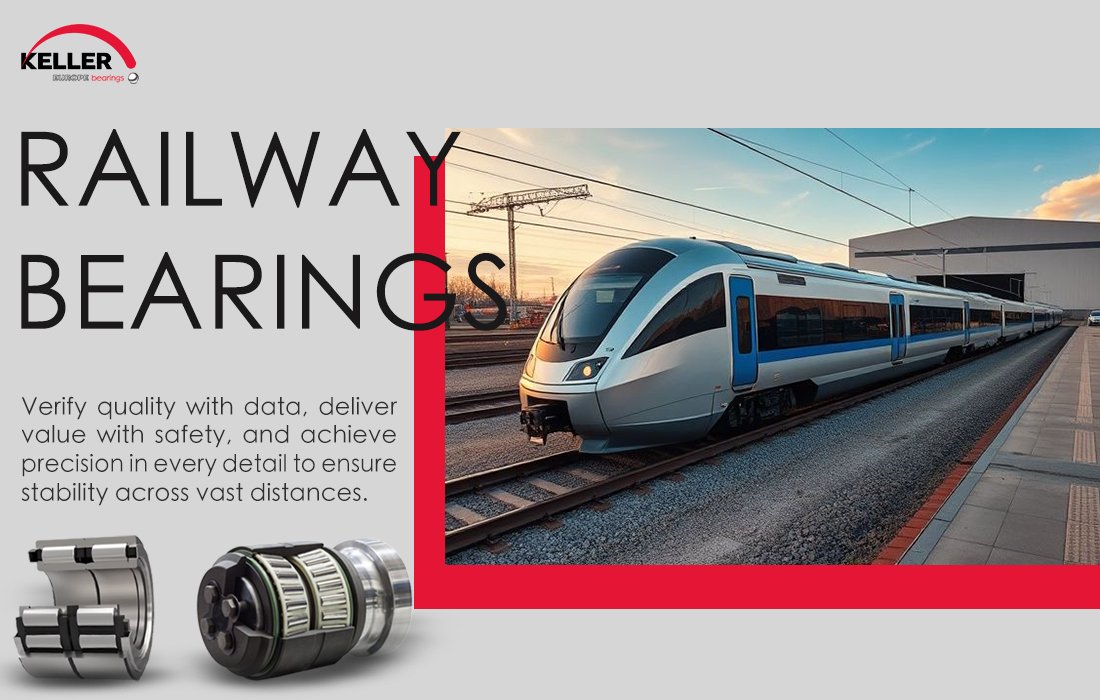
FAG railway bearings are a key product in the railway vehicle bearing field, primarily used in railway locomotives, EMUs, high-speed trains, freight cars, and urban rail transit vehicles. As critical rotating components of railway vehicles, railway bearings must withstand high-speed rotation, vehicle loads, vibration and shocks, and complex operating environments for extended periods. Therefore, high requirements are placed on bearing load capacity, operational stability, sealing performance, and service life.
What are FAG Railway Bearings?
FAG is a major bearing brand under the Schaeffler Group, possessing a mature bearing product and technology system in the railway industry. FAG railway bearings are mainly used in wheelsets, axle boxes, traction motors, gearboxes, and other rotating mechanisms of railway vehicles, ensuring stable operation by reducing friction and supporting rotating components.Depending on different vehicle structures, load conditions, operating speeds, and installation space, FAG railway bearings can be adopted in different structural forms, including cylindrical roller bearings, tapered roller bearings, spherical roller bearings, and other railway-specific bearing structures.
Where are FAG railway bearings mainly installed?
1. Wheelset Bearings
Wheelsets are a crucial component of the railway vehicle’s running gear. After the axle connects to the wheel, bearings are essential for stable rotation. Wheelset bearings must withstand the vehicle’s own weight, passenger or cargo loads, and impact loads generated during operation.Therefore, railway wheelset bearings typically require high load-bearing capacity, rotational accuracy, and reliability.
2. Axle Box Bearings
Railway axle box bearings are key components of the railway vehicle’s axle box system. They are usually installed near the axle end and connected to the bogie via the axle box.
Their main function is to support the rotation of the wheelset and transfer the loads generated during operation to the bogie. For high-speed trains, locomotives, and freight cars, the stable operation of the axle box bearings directly affects the vehicle’s operational reliability.
3. Traction Motor Bearings
High-speed trains, locomotives, and urban rail vehicles typically use traction motors for power. The rotor inside the traction motor needs to rotate at high speeds, thus placing high demands on the bearings’ high-speed performance, temperature rise control, lubrication, and insulation performance.
4. Gearbox Bearings
The railway vehicle gearbox is responsible for transmitting the power generated by the traction motor. Gear meshing generates radial and axial loads, therefore gearbox bearings need to be selected appropriately based on the gearbox structure and operating conditions.
Key Features of FAG Railway Bearings
* High Load Capacity:Railway vehicles, especially heavy-haul freight trains, need to withstand large static and dynamic loads. Therefore, railway bearings require high basic dynamic load ratings and good shock resistance.
* High-Speed Operation Performance:High-speed railways and EMUs operate at high speeds, requiring bearings to maintain stable operation under high-speed rotation conditions while controlling temperature rise, friction, and vibration.
* High Reliability:Railway bearings are a critical component of vehicles and need to maintain stable performance over long operating cycles. Therefore, bearing materials, heat treatment, manufacturing precision, lubrication, and sealing are all crucial factors.
* Good Sealing Performance:Railway vehicles operate in complex environments for extended periods, and bearings may be affected by dust, moisture, and other contaminants. Therefore, a reliable sealing structure helps reduce the risk of contaminants entering the bearing.
Suitable for Different Railway Vehicles
Depending on their structure and operating conditions, railway bearings can be used in:
High-speed trains,High-speed railway vehicles,Electric locomotives,Diesel locomotives,Railway passenger cars,Railway freight cars,Metro vehicles,Urban light rail vehicles,Trams
What are the differences between FAG railway bearings and ordinary industrial bearings?
Although both railway vehicle bearings and ordinary industrial equipment bearings are rolling bearings, their operating environments differ significantly.Railway vehicles need to operate continuously for long distances, while enduring high-speed rotation, impact vibration, temperature changes, and complex environmental influences. Therefore, railway bearings place greater emphasis on safety, reliability, high-speed performance, impact resistance, sealing performance, lubrication performance, and lifespan.Ordinary industrial bearings, on the other hand, need to be selected based on the specific operating conditions of equipment such as fans, pumps, reducers, conveyors, and rolling mills. The two cannot be simply substituted based on size.
How to select FAG railway bearings?
Railway bearing selection typically requires comprehensive consideration of the following parameters:
Bearing type: Select cylindrical roller bearings, tapered roller bearings, etc., based on radial load, axial load, and rotation method.Shaft Diameter:The bearing inner diameter must match the axle or mounting journal dimensions.Load:The vehicle weight, load, and dynamic impact loads generated during operation need to be calculated.Speed: High-speed trains and ordinary railway freight cars operate at different speeds, requiring the selection of bearings suitable for their respective speed ranges.Operating Temperature: The temperature rise during bearing operation and changes in ambient temperature must be considered.Lubrication Method:Appropriate grease or other lubrication methods should be selected based on the bearing structure, speed, and operating environment.Sealing Structure:Suitable sealing and anti-contamination methods should be selected based on the vehicle’s operating environment.
Application Value of FAG Railway Bearings
Although railway bearings are typically small in size, they play a crucial role in supporting wheelsets and rotating systems. High-performance railway bearings help reduce rotational friction, improve mechanical transmission efficiency, and provide reliable mechanical support for the long-term stable operation of railway vehicles.For high-speed railways, urban rail transit, and heavy-haul railway transportation, bearing performance not only affects vehicle operating efficiency but is also closely related to maintenance cycles, operating costs, and vehicle reliability.
How to Choose a FAG Railway Bearing Supplier?
When procuring railway bearings, it’s crucial to consider not only the brand but also the bearing model, dimensions, precision grade, materials, heat treatment, sealing structure, lubrication method, and product quality control system.For railway vehicle maintenance, equipment manufacturing, and export trading companies, matching railway bearings can be selected based on the specific vehicle model, axle size, operating speed, and load conditions.If replacing or matching FAG railway bearings is necessary, selection should be based on the actual bearing model and technical parameters, not simply on single dimensions such as outer or inner diameter.In conclusion, FAG railway bearings primarily serve critical rotating systems in railway vehicles, including wheelsets, axle boxes, traction motors, and gearboxes, and have significant application value in high-speed railways, EMUs, locomotives, freight cars, and urban rail transit.
For railway bearing procurement and equipment manufacturing companies, selecting suitable railway vehicle bearings requires comprehensive consideration of factors such as load, speed, axle diameter, operating environment, lubrication, sealing, and service life. Professional bearing selection and quality control can provide reliable support for the safe, stable, and efficient operation of railway vehicles.


