
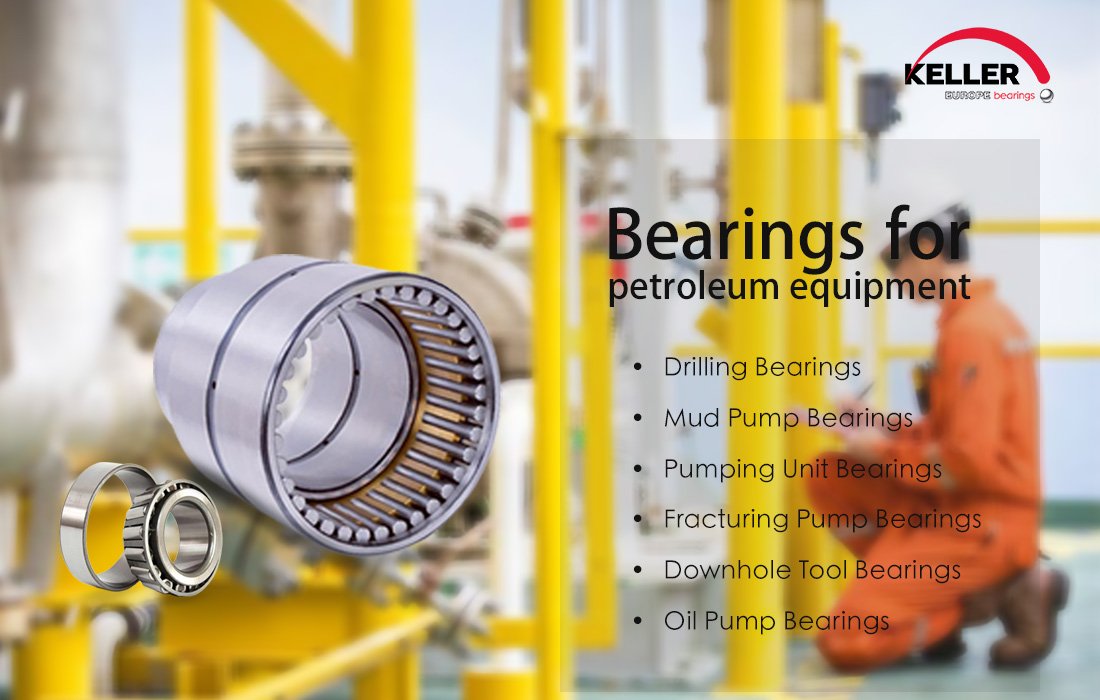
During production stages such as oil extraction, drilling, transport, and oil and gas processing, mechanical equipment often operates continuously for long periods and faces complex conditions involving heavy loads, impacts, high temperatures, dust, mud, and vibration. As critical components of the equipment’s drive system, bearings serve to support rotating parts, reduce friction, and transmit loads. Severe bearing wear not only disrupts normal equipment operation but also increases maintenance costs and can even lead to unplanned downtime. So, what causes this severe wear in petroleum machinery bearings?
I. Overload operation leading to bearing wear
In actual production, petroleum machinery is frequently subjected to significant radial loads, axial loads, and instantaneous impact loads. If the equipment operates beyond the bearing’s design load capacity for extended periods, contact stress between the rolling elements and raceways increases significantly, making issues such as surface fatigue, pitting, and spalling likely.
Furthermore, frequent equipment starts and stops, sudden acceleration, or load fluctuations can subject bearings to substantial impact forces. Prolonged exposure to such conditions can result in abnormal wear, even if the bearing itself is of high quality. Therefore, actual equipment loads must be fully considered during the selection process, rather than simply choosing a bearing based solely on dimensions.
II. Insufficient lubrication or improper lubrication methods
Proper lubrication creates a protective film between the bearing’s rolling elements and raceways, minimizing direct metal-to-metal contact. If the grease or lubricating oil is insufficient or has deteriorated—or if the lubricant type is mismatched with actual operating conditions—friction resistance increases, and operating temperatures rise.
Lubrication performance requirements are particularly stringent under conditions of high temperature, heavy load, and high speed. Failure to replenish or replace lubricant in a timely manner based on equipment operation can easily lead to bearing overheating, wear, or even thermal damage (burning). Consequently, selecting appropriate lubrication materials and establishing standardized lubrication maintenance schedules is crucial.
III. Contaminants entering the bearing
The operating environment for oilfield machinery is often complex; dust, mud, moisture, and other impurities can all be significant factors affecting bearing service life. If bearing sealing is inadequate, or if protection during installation and maintenance is insufficient, contaminants entering the bearing can cause scratches and abrasive wear on the surfaces of the raceways and rolling elements.
In environments such as drilling and oil extraction, the ingress of drilling mud and moisture can also degrade grease performance and even lead to corrosion. Therefore, enhancing sealing and protection measures is crucial for minimizing bearing wear caused by contaminants.
IV. Abnormal Loading Due to Improper Installation
Although bearing installation may appear straightforward, improper procedures can easily lead to premature failure. For instance, directly striking the bearing, applying uneven force, misaligning the bearing housing with the shaft, or failing to seat the bearing correctly can all result in eccentric or uneven loading.Such abnormal loading subjects specific areas of the raceways and rolling elements to excessive localized stress, thereby accelerating wear. Consequently, appropriate tools and methods should be used during installation, and dimensions regarding the shaft, housing, and mating parts should be verified to ensure installation precision meets equipment specifications.
V. Improper Bearing Clearance
Bearing clearance is a critical factor in normal operation. If the clearance is too small, the temperature rise during operation can further reduce internal clearance, leading to increased friction, overheating, or even seizure. Conversely, excessive clearance can cause instability in rotating components, resulting in increased vibration and shock loads.Operating conditions for petroleum machinery vary significantly; therefore, no single clearance setting is universally applicable. The appropriate bearing clearance should be selected based on actual operating conditions, including rotational speed, load, temperature, and installation method.
VI. Prolonged Vibration and Shock
Petroleum machinery—such as drilling equipment, mud pumps, and pumping units—often operates amidst significant vibration and shock. Prolonged exposure to high levels of vibration subjects the bearing’s internal components to continuous alternating loads, which can easily cause fatigue damage to the rolling elements and raceways.Furthermore, issues such as eccentricity or looseness in the equipment foundation, drive shafts, or other associated components can amplify these vibrations. Therefore, in addition to focusing on the bearing itself, it is essential to regularly monitor the overall operating condition of the machinery and promptly identify the sources of any abnormal vibration.
How can the risk of bearing wear in petroleum machinery be reduced? Bearing wear is not solely an issue with the bearing itself; rather, it is influenced by a range of factors, including bearing selection, operating conditions, lubrication, installation precision, and routine maintenance. For petroleum machinery, it is essential to select bearings appropriate for the specific load, rotational speed, temperature, vibration, and operating environment, while also ensuring proper sealing, standardized installation, and regular lubrication and maintenance.Selecting high-quality bearings suited to actual operating conditions not only enhances equipment stability and extends bearing service life but also effectively mitigates risks associated with unexpected failures, downtime, and maintenance, thereby ensuring the long-term, stable operation of oilfield machinery.


