
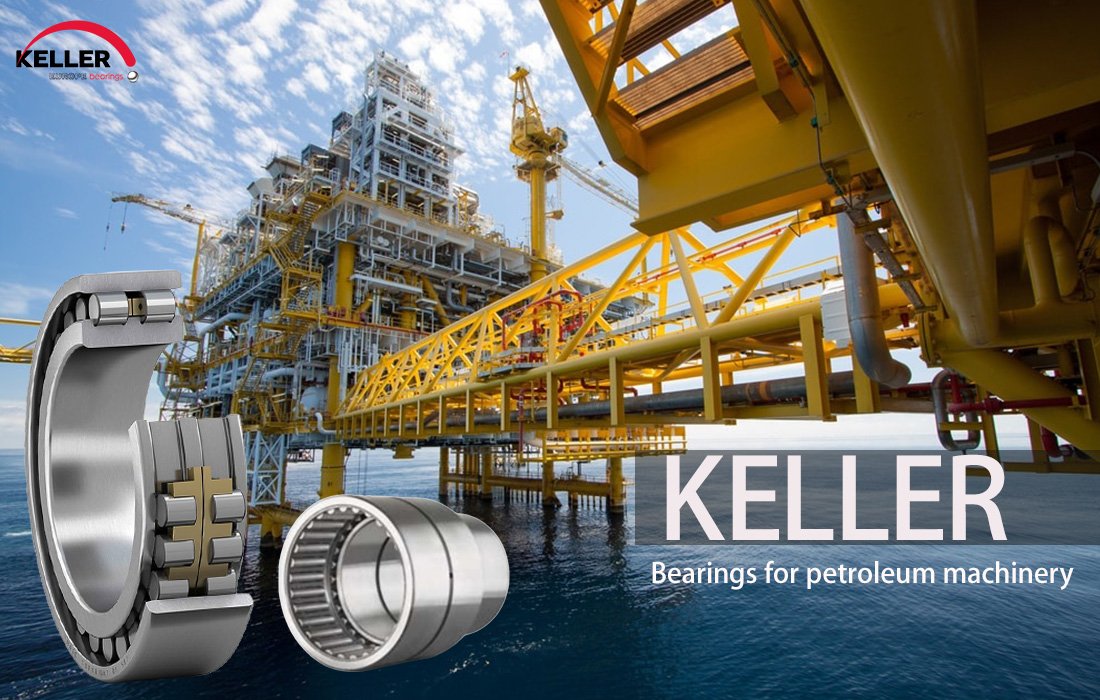
Bearings are essential components in petroleum equipment, supporting rotating parts and ensuring smooth and reliable operation. However, bearings used in drilling rigs, mud pumps, pumping units, compressors, and other oilfield machinery often operate under heavy loads, vibration, high temperatures, and harsh environmental conditions. These factors can significantly affect bearing performance and service life.Understanding the key factors that influence bearing life can help equipment operators choose suitable bearings, improve maintenance practices, and reduce unexpected downtime.
1. Bearing Load
Load is one of the most important factors affecting bearing service life. Petroleum equipment often operates under heavy radial loads, axial loads, and impact loads. If the actual load exceeds the bearing’s rated capacity, contact stress between the rolling elements and raceways increases, accelerating fatigue, wear, and surface damage.Frequent load fluctuations and sudden impacts can also shorten bearing life. Therefore, bearing selection should consider not only the basic equipment load but also shock loads, operating conditions, and possible load variations.
2. Operating Speed
Operating speed directly affects bearing friction, heat generation, and lubrication performance. When a bearing runs at excessive speed, friction and temperature can increase, potentially causing lubricant deterioration and accelerated wear.For high-speed petroleum equipment, such as certain pumps, compressors, and rotating machinery, the bearing should have an appropriate speed rating. The lubrication method and lubricant viscosity should also be selected according to the actual operating speed.
3. Operating Temperature
Temperature is another critical factor. Petroleum machinery may operate in high-temperature environments or generate significant heat during continuous operation. Excessive temperature can reduce lubricant performance, accelerate lubricant oxidation, and affect bearing material and dimensional stability.For high-temperature applications, it is important to select bearings and lubricants suitable for the expected temperature range. Proper heat dissipation and temperature monitoring can also help prevent premature bearing failure.
4. Lubrication Conditions
Proper lubrication reduces friction between the rolling elements and raceways while helping to control operating temperature. Insufficient lubrication can result in increased friction, overheating, surface damage, and accelerated wear.However, excessive lubricant can also cause problems. Too much grease may increase churning resistance and operating temperature, while excessive oil levels can increase energy loss and heat generation.
Therefore, the correct lubricant type, quantity, lubrication method, and maintenance interval should be determined according to the bearing type and actual operating conditions.
5. Installation Precision
Even a high-quality bearing may experience premature failure if it is installed incorrectly. Misalignment, uneven mounting force, improper fitting, or damage during installation can create abnormal loads inside the bearing.For petroleum equipment, installation should be performed using appropriate tools and procedures. The shaft, housing, alignment, fit, and bearing clearance should be checked carefully to ensure the bearing operates under the intended conditions.
6. Operating Environment
Petroleum equipment often operates in demanding environments containing dust, mud, water, chemicals, and other contaminants. If contaminants enter the bearing, they can damage the raceways and rolling elements, contaminate the lubricant, and accelerate wear.Effective sealing and protection are therefore essential. Regular inspection of seals, lubrication systems, and surrounding equipment can help prevent contamination-related failures.
How to Extend Bearing Service Life
Extending bearing life requires more than simply choosing a high-quality product. First, select a bearing according to the actual load, speed, temperature, and working environment. Second, use the correct lubricant and establish a suitable lubrication schedule. Third, ensure accurate installation and proper bearing clearance. Finally, monitor vibration, temperature, noise, and lubrication conditions during operation to identify potential problems at an early stage.For petroleum equipment, choosing high-quality bearings matched to actual operating conditions, combined with correct installation, effective lubrication, and regular maintenance, can significantly improve bearing reliability and service life. This helps reduce unexpected equipment downtime, maintenance costs, and production interruptions while supporting the stable operation of oilfield machinery.


