
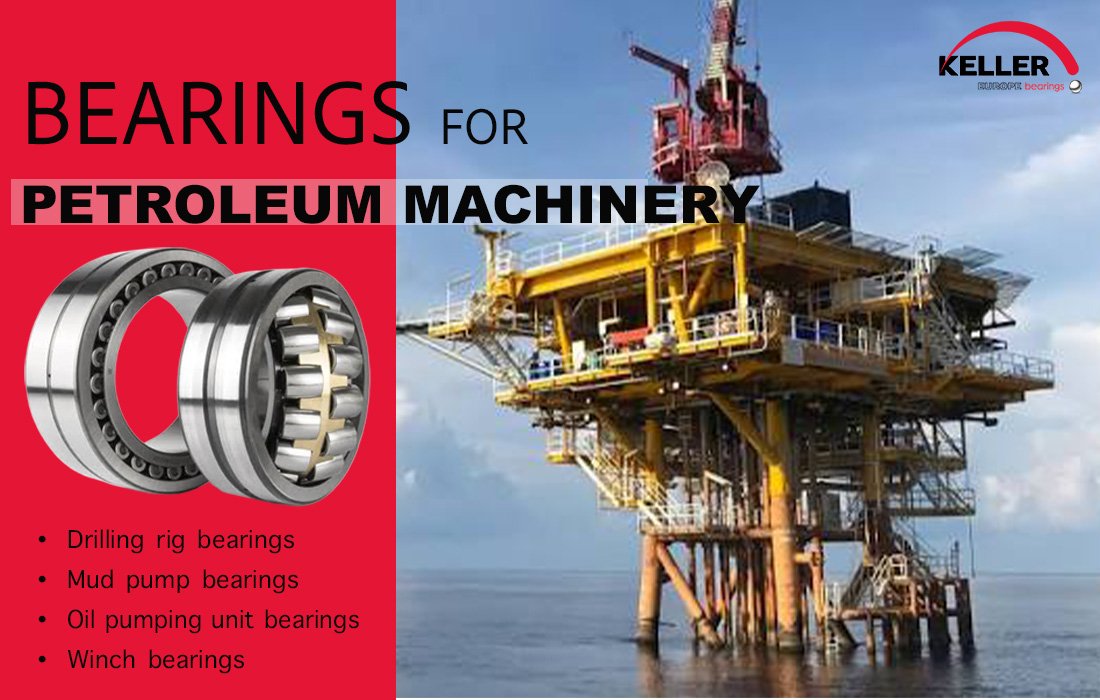
Bearings for petroleum equipment are used in machinery such as drilling rigs, oil extraction units, mud pumps, fracturing equipment, and conveying systems. They typically must withstand heavy loads, shock, vibration, high temperatures, and complex operating environments. Therefore, when purchasing these bearings, one should not focus solely on price; instead, it is crucial to comprehensively evaluate the manufacturer’s production capacity, technical expertise, product quality, and service capabilities. Selecting a manufacturer that truly suits your specific operating conditions can reduce the risk of equipment failure and downtime.
1. Comprehensive Product Range
First, consider whether the manufacturer’s product range meets your actual needs. Professional manufacturers of petroleum equipment bearings usually offer a comprehensive product portfolio, providing bearings with various structures, dimensions, precision grades, and load-bearing capacities. A wider range of models facilitates better selection based on the specific requirements of machinery such as drilling rigs, mud pumps, and pumping units.
2. Support for Non-Standard Customization
Petroleum machinery comes in many varieties, and some equipment requires bearings with unique dimensions, structures, or performance characteristics. Consequently, a manufacturer’s ability to design and customize non-standard bearings is a key factor to evaluate during procurement.If a manufacturer can provide customized solutions based on equipment blueprints, bearing dimensions, loads, rotational speeds, and operating environments, they are better positioned to meet the demands of specialized operating conditions.
3. Material and Heat Treatment Capabilities
Bearing materials and heat treatment processes directly influence product strength, hardness, wear resistance, and fatigue life. When purchasing, inquire about the types of bearing steel or alloy materials used, as well as the stability of the manufacturer’s heat treatment processes and quality control capabilities.For operating conditions involving heavy loads, high impact, or high temperatures, it is particularly important to ensure that material properties and heat treatment processes meet actual usage requirements.
4. Dimensional Precision and Manufacturing Capabilities
Bearings are precision mechanical components; dimensional precision, rotational accuracy, and fit precision all impact equipment performance. Insufficient manufacturing precision can lead to increased vibration, noise, or even abnormal wear.Therefore, focus on the manufacturer’s production capabilities—such as turning and grinding—as well as their procedures for dimensional inspection and precision control.
5. Comprehensive Product Testing
A robust testing system is a crucial element in ensuring bearing quality. When sourcing, it is advisable to verify whether the manufacturer conducts inspections on raw materials, heat treatment, dimensional accuracy, hardness, and rotational performance, and whether they can provide corresponding inspection reports or quality certificates.Implementing quality control throughout the entire process—from raw materials to the finished product—better ensures the consistency and stability of batch production.
6. Stability of Production Capacity
Enterprises in the oilfield equipment sector often require bearings in large quantities; therefore, a manufacturer’s actual production capacity and the stability of that capacity are crucial. Before purchasing, one should evaluate the enterprise’s production equipment, processes, workforce, and quality management system to avoid project delays caused by insufficient capacity.
This is particularly important for long-term projects, where selecting a manufacturer with a mature production system and stable supply capabilities is essential.
7. Reasonableness of Delivery Lead Times
If petroleum machinery shuts down due to bearing failure, it can result in significant production losses. Consequently, when purchasing bearings, one must consider not only product quality but also delivery lead times and supply stability.A manufacturer’s ability to meet agreed-upon delivery schedules, along with their inventory management and production planning, are key factors influencing the purchasing experience.
8. Quality of After-Sales Service
A professional manufacturer should provide not only the bearings themselves but also relevant technical support. If issues such as abnormal temperature rise, vibration, noise, or premature failure occur, a manufacturer capable of assisting with root cause analysis and providing solutions can help users resolve equipment problems more quickly.Therefore, before purchasing, it is important to assess the manufacturer’s after-sales response time, technical support capabilities, and mechanisms for handling quality issues.
9. Experience in Petroleum Machinery Applications
Compared to standard industrial bearings, bearings used in petroleum equipment operate under more complex conditions. Manufacturers with experience in the petroleum machinery industry typically have a better understanding of bearing performance requirements—such as handling heavy loads, impacts, high temperatures, vibrations, and contaminated environments—and can offer more targeted product selection and technical support.
Conclusion
When selecting a manufacturer for petroleum equipment bearings, one should not focus solely on price but rather conduct a comprehensive evaluation covering product models, non-standard customization, materials and heat treatment, machining precision, inspection capabilities, production capacity, delivery lead times, after-sales service, and industry application experience. For petroleum machinery intended for long-term use, choosing a manufacturer that offers stable product quality, reliable production capacity, and excellent technical service not only enhances equipment operating efficiency but also helps reduce bearing failures, downtime, and maintenance costs. Only by fully understanding the manufacturer’s capabilities prior to procurement and selecting the appropriate bearing products based on actual operating conditions can bearings truly meet the requirements for the long-term, stable, and reliable operation of petroleum equipment.


