
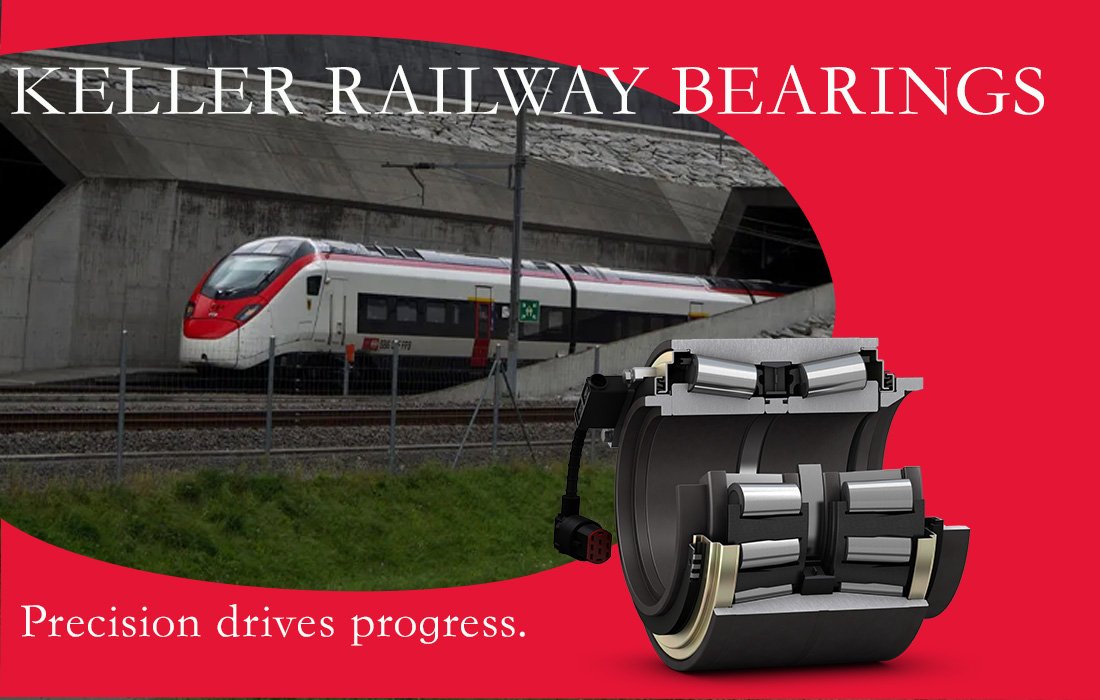
Railway axle box bearings are critical components of railway vehicles. Installed within the axle box, they primarily support the rotation of the axle, reduce friction, and facilitate stable vehicle operation.As railway vehicles operate, the wheels and axles rotate continuously. Axle box bearings must support the vehicle’s weight and withstand the shocks and vibrations encountered during operation. Consequently, they require high load-bearing capacity and wear resistance.
What are railway axle box bearings?
Railway axle box bearings are specialized bearings designed for railway vehicles. They are primarily used in electric multiple units (EMUs), high-speed trains, passenger coaches, freight wagons, and locomotives.The axle box is located on either side of the wheelset, with the bearing installed inside it. The bearing connects the axle to the bogie, allowing the axle to rotate smoothly while minimizing frictional resistance.These bearings are typically manufactured from high-strength bearing steel using precision machining processes. Strict dimensional control enhances the bearing’s operational precision.
What is the function of railway axle box bearings?
1. Supporting the axle
Axle box bearings support the axle. During operation, the axle must bear the weight of the vehicle body and its load; the bearings help maintain stable axle rotation.
2. Reducing friction
Friction is generated when the axle rotates at high speeds. Axle box bearings reduce rotational resistance, thereby minimizing energy loss and limiting the rise in bearing temperature.
3. Withstanding operational loads
Railway vehicles are subjected to vertical loads, lateral forces, and impact forces. Axle box bearings must withstand these complex loads, requiring excellent strength and fatigue resistance.
4. Enhancing operational stability
Bearing precision affects the performance of the wheelset. High-precision axle box bearings reduce vibration and noise, helping to ensure smooth vehicle operation.
5. Reducing maintenance costs
High-quality axle box bearings offer a long service life. Robust sealing structures prevent the ingress of dust and moisture, while proper lubrication minimizes wear. These factors reduce the frequency of maintenance and overall repair costs.
Performance requirements for railway axle box bearings
High-speed trains impose more rigorous requirements on axle box bearings. First, the bearings must exhibit excellent high-speed performance. Higher train speeds result in faster bearing rotation, requiring manufacturers to effectively manage temperature rise.Second, the bearings require superior wear resistance. Continuous operation generates constant friction; high-quality materials help minimize wear and extend service life.Axle box bearings also need robust sealing capabilities. Railway vehicles are frequently exposed to rain, dust, and grit, so a reliable sealing structure is essential to protect the bearing’s internal components.
Applications of Railway Axle Box Bearings
Railway axle box bearings are widely used across various types of railway vehicles. High-speed electric multiple units (EMUs) typically require bearings with high precision and reliability, whereas freight wagons prioritize load-bearing capacity and durability.
Different vehicles require specific bearing models. Purchasers must select the appropriate product based on factors such as axle dimensions, load, operating speed, and the working environment.
For international buyers, suppliers must also provide comprehensive product specifications. Key parameters include the bearing model, inner diameter, outer diameter, width, material, and precision grade.
Conclusion
Although compact in size, railway axle box bearings directly impact the safety and stability of vehicle operations. They perform critical functions such as supporting the axle, reducing friction, and bearing loads.As high-speed rail and railway transportation continue to evolve, the market demand for high-performance axle box bearings is steadily rising. Specialized manufacturers must continuously enhance product precision, material performance, and quality control to deliver reliable axle box bearing solutions to global railway clients.


