
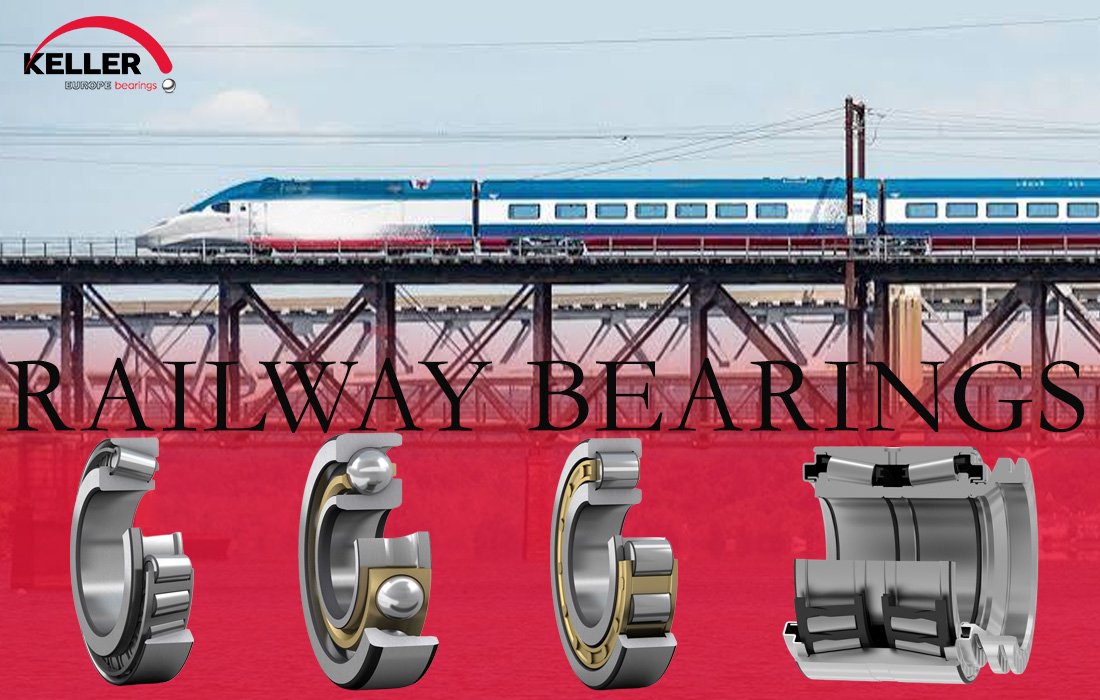
Railway traction motors are vital power components for rail vehicles, responsible for driving their operation. As these motors must rotate at high speeds for extended periods, the bearings within them play a critical role.Railway bearings support the motor shaft and minimize friction and vibration. Consequently, they directly influence the motor’s operating efficiency and the vehicle’s operational stability.
Key Functions of Traction Motor Bearings
First, bearings support the motor shaft. During operation, the shaft rotates continuously at high speeds; therefore, the bearings must maintain stable rotation.Second, bearings reduce friction. High-quality bearings lower operational resistance and minimize energy loss.Additionally, bearings mitigate vibration and noise. Precision bearings offer excellent rotational accuracy, helping the motor run smoothly.Finally, bearings must withstand specific loads. Motor operation generates both radial and axial forces, requiring the bearings to possess high load-bearing capacity.
Requirements for Railway Traction Motor Bearings
First, bearings must perform well at high speeds. Given the high operating speeds of rail vehicles and the fluctuating rotational speeds of traction motors, bearings must be capable of handling rapid rotation.Second, bearings require good temperature resistance. High-speed rotation and the motor’s internal environment generate significant heat; thus, bearings must maintain stable performance under these conditions.Furthermore, bearings need excellent wear resistance. Traction motors operate for long periods daily, subjecting bearings to continuous friction; high-quality materials help minimize wear.Lubrication performance is also crucial. Appropriate grease reduces friction and helps regulate operating temperatures; therefore, manufacturers must select the right lubrication strategy based on the motor’s operating conditions.
Application of Insulated Bearings in Traction Motors
Some traction motors require insulated bearings. Motor operation can generate shaft currents; if this current passes through the bearings, it can cause electrical erosion.Insulated bearings mitigate the flow of current through the bearing assembly, protecting the raceways and rolling elements while extending the bearing’s service life.Common insulation solutions currently include bearings with ceramic coatings and bearings with ceramic rolling elements. Different motor structures require different solutions; therefore, purchasers must select the appropriate bearings based on specific motor parameters.
Manufacturing and Maintenance of Railway Bearings
High-performance traction motor bearings require precision manufacturing. Manufacturers must strictly control bearing dimensions and ensure high surface quality for the raceways.Additionally, heat treatment enhances material properties, while precision grinding improves rotational accuracy. Consequently, advanced manufacturing processes ensure the bearings maintain stable performance.During operation, operators need to conduct regular inspections, monitoring for changes in temperature, vibration, and noise. Prompt inspection is required if any anomalies arise, thereby reducing the risk of equipment failure.
International Market Applications for Railway Bearings
With the expansion of high-speed rail, subways, and urban rail transit, international demand for traction motor bearings is steadily rising, presenting significant growth potential in overseas markets.Overseas buyers typically focus on bearing models, dimensions, and materials, as well as insulation class, precision, and service life. Suppliers must therefore provide comprehensive technical documentation.Furthermore, reliable delivery capabilities are crucial. Proper packaging minimizes transit damage, while robust after-sales service supports customers in the long-term use of the products.
Conclusion
Railway bearings play a vital role in traction motors by supporting the rotating shaft and reducing friction, as well as minimizing vibration and noise.
Consequently, high-performance traction motor bearings must offer high-speed capability, temperature and wear resistance, and operational reliability. As rail transit continues to develop, the market demand for high-quality railway motor bearings will keep growing.


