
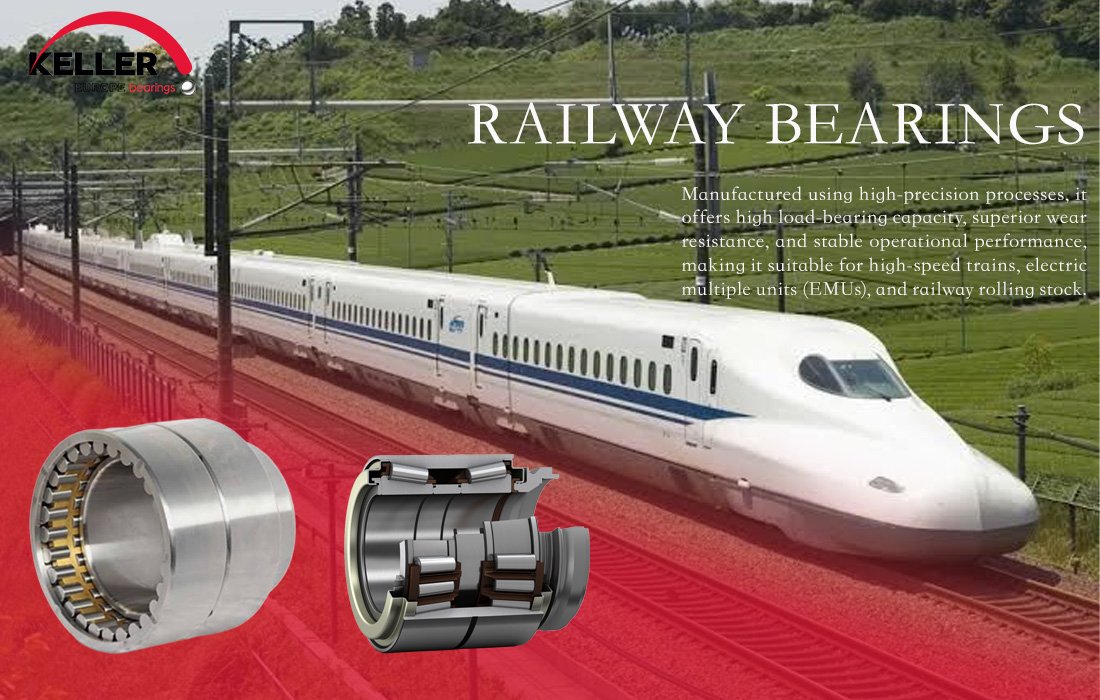
The railway gearbox is a critical component of the drivetrain in rail vehicles. It is responsible for power transmission and rotational speed regulation; therefore, stable operation is essential. Railway bearings play a vital supporting role in this system.Railway bearings support the gear shaft and help minimize friction and vibration. They also ensure the gearbox maintains high transmission efficiency. Consequently, the quality of the bearings directly impacts the vehicle’s operational performance.
Functions of Bearings in Railway Gearboxes
First, bearings support the gear shaft. As the train operates, the gear shaft rotates continuously, requiring the bearings to maintain high rotational precision.Second, bearings withstand loads generated by gear meshing. Gear operation produces both radial and axial forces, necessitating high load-carrying capacity.Furthermore, bearings reduce friction. High-quality bearings lower operational resistance and minimize energy loss.Additionally, bearings help reduce gearbox vibration. High-precision bearings ensure stable gear shaft rotation, thereby helping to lower operating noise.
Performance Requirements for Railway Gearbox Bearings
First, bearings must possess high load-carrying capacity. Rail vehicles undergo frequent starting and braking, subjecting the gearbox to significant impact loads.Second, bearings require good wear resistance. Continuous operation generates persistent friction, so high-quality bearing materials are essential to minimize wear.Furthermore, bearings must accommodate high rotational speeds. High-speed trains operate at high velocities, requiring the gear shaft to spin rapidly; bearings must control temperature rise and maintain stable performance.Additionally, bearings require effective sealing capabilities. Gearboxes rely on lubricating oil or grease, so bearings must minimize the leakage of these lubricants.
Common Bearing Types for Railway Gearboxes
Different bearings are selected based on the gearbox structure. Cylindrical roller bearings offer high radial load-carrying capacity, making them suitable for certain high-load gear shaft applications.Tapered roller bearings can withstand both radial and axial loads, making them suitable for complex loading conditions. Deep-groove ball bearings feature a compact structure and low friction, making them suitable for use in certain auxiliary transmission systems.Specific selection depends on factors such as gearbox structure, rotational speed, load, and installation space. Professional suppliers can offer recommendations based on customer-provided parameters.
Lubrication and Maintenance of Railway Bearings
Lubrication significantly affects bearing performance. Proper lubricant reduces friction and aids in heat dissipation.Consequently, maintaining the correct oil level in the gearbox is essential, and operational staff must regularly monitor the condition of the lubricant.Additionally, monitoring bearing temperature and vibration is crucial; a continuous rise in temperature requires immediate investigation to identify the cause, thereby reducing the risk of equipment failure.
The International Market for Railway Bearings
The expansion of high-speed rail and urban rail transit has driven a steady increase in demand for railway gearbox bearings, creating significant growth potential in the international market.Overseas buyers typically focus on bearing models, dimensions, materials, and precision, as well as service life and delivery lead times.Therefore, suppliers must provide comprehensive technical documentation, including product dimensions, load parameters, speed ranges, and compatible gearbox types.
Proper export packaging is also vital to minimize impact damage and contamination during transit. Furthermore, reliable delivery capabilities help suppliers establish long-term partnerships.
Conclusion
Railway bearings play a critical role in gearboxes by supporting gear shafts and withstanding operational loads, while also minimizing friction, vibration, and noise.Consequently, high-performance railway gearbox bearings must offer high load-bearing capacity, wear resistance, high-speed capability, and operational stability. As railway transportation continues to evolve, demand for high-quality railway gearbox bearings in overseas markets is expected to grow steadily.


