
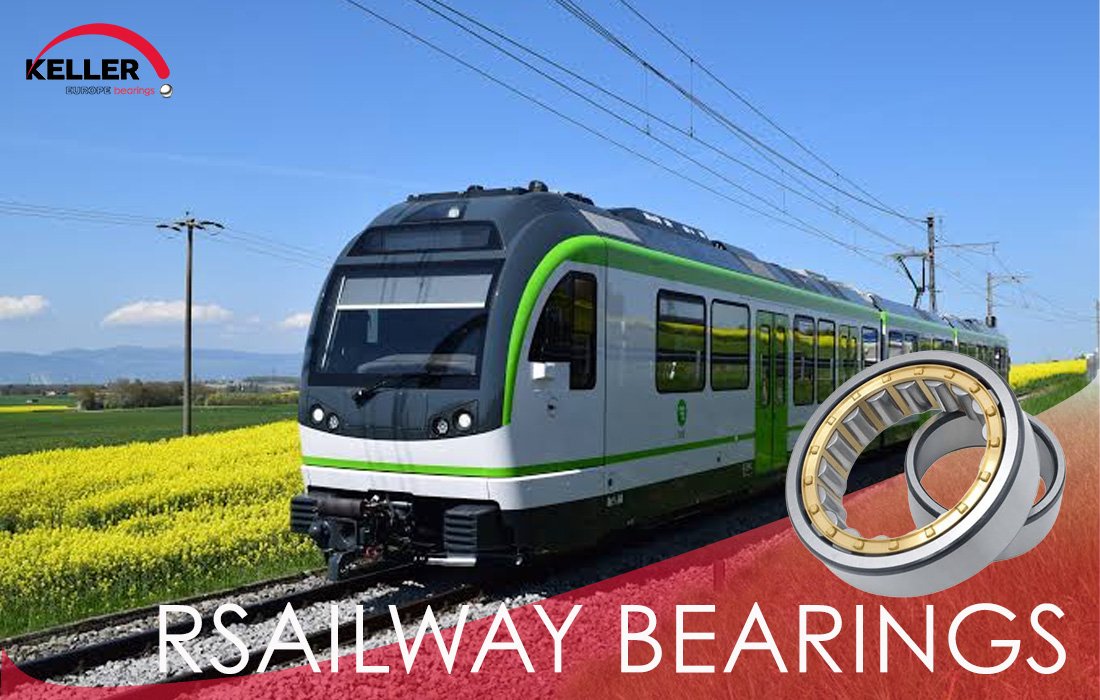
There are many brands of railway bearings, and model designations can vary between them. Consequently, overseas buyers often need to cross-reference models.However, differing model numbers do not necessarily mean the products are not interchangeable. Buyers must first verify the bearing’s dimensions and structure. It is also essential to compare parameters such as load ratings, rotational speeds, and precision classes.
1. Verify Basic Bearing Dimensions
First, confirm the bearing’s inner diameter (bore), outer diameter, and width.
These three dimensions directly affect installation. The inner diameter must match the axle, the outer diameter must fit the axle box or bearing housing, and the width must suit the available installation space.Therefore, when cross-referencing brands and models, comparing these three dimensions is a good starting point.
2. Verify Bearing Structure
Different brands may use different model codes; thus, buyers should not rely solely on comparing numbers.For instance, cylindrical roller bearings come in various configurations—such as NU, NJ, and NUP—which offer differing axial locating capabilities.
Consequently, even if two bearings have similar dimensions, one may not be a suitable direct replacement for the other.Similarly, tapered roller bearings feature different structural designs. Buyers need to verify the specific raceway and roller configurations.
3. Compare Load Ratings
Bearings with identical dimensions may still have different load ratings. Therefore, buyers should compare dynamic and static load ratings.Dynamic load rating is typically denoted by “C,” while static load rating is denoted by “C₀.”If railway vehicles are subjected to heavy loads over extended periods, it is crucial to select bearings with appropriate load-bearing capacities.This is particularly important for freight wagons and locomotives, which generally require high load-bearing capabilities.
4. Compare Rotational Speed and Precision
High-speed rail applications impose strict requirements on bearing rotational speeds. Therefore, when cross-referencing models, it is essential to compare limiting speeds.Additionally, bearing precision affects operational performance; high-precision bearings help minimize vibration and noise.Consequently, for high-speed trains, bearing precision and high-speed performance are key considerations.
5. Compare Internal Clearance and Sealing
Bearing internal clearance is also a critical factor. Common clearance classes include CN and C3.Different operating conditions require different clearance levels; therefore, buyers must verify the clearance specifications of the original bearing. Additionally, sealing configurations must be compared. Some bearings utilize dust shields, while others employ contact seals.Differences in sealing structures affect lubrication requirements and suitability for specific operating environments. Therefore, purchasers must make selections based on actual operating conditions.
6. Pay attention to specialized railway bearing models
Railway bearings differ from standard industrial bearings; some feature specialized designs.For instance, railway axle-box bearings must meet specific vehicle operational requirements. Bearings for high-speed trains must also account for high speeds, temperature rise, and fatigue life.Consequently, purchasers cannot simply substitute them with standard industrial bearing models.
7. How to cross-reference brands and models?
Overseas purchasers can follow this sequence for comparison:First, identify the original brand and model number. Then, verify the inner diameter, outer diameter, and width.Next, compare the bearing structure. Follow this by comparing the C-rating (dynamic load rating), C₀-rating (static load rating), rotational speed, and precision class.Finally, confirm the internal clearance, sealing, lubrication, and material specifications.Only when all parameters match can the supplier confirm a suitable replacement model.
Considerations for international procurement
Part numbering conventions vary across brands; therefore, it is best for purchasers to provide the complete model number.If the full model number is unavailable, providing photographs and dimensions of the bearing is an alternative.
Additionally, providing details on the vehicle type and installation position—such as whether it is for an EMU (Electric Multiple Unit), locomotive, passenger coach, or freight wagon—is helpful.This information enables suppliers to perform a more accurate cross-reference of brands and models.
Conclusion
Cross-referencing railway bearing brands and models requires looking beyond just the model numbers. One must first compare dimensions and verify the structural design.It is also essential to compare load ratings, rotational speeds, precision classes, internal clearances, and sealing performance.
Therefore, professional cross-referencing must take actual operating conditions into account. Only through a comprehensive comparison of technical parameters can a suitable replacement railway bearing be identified.


