
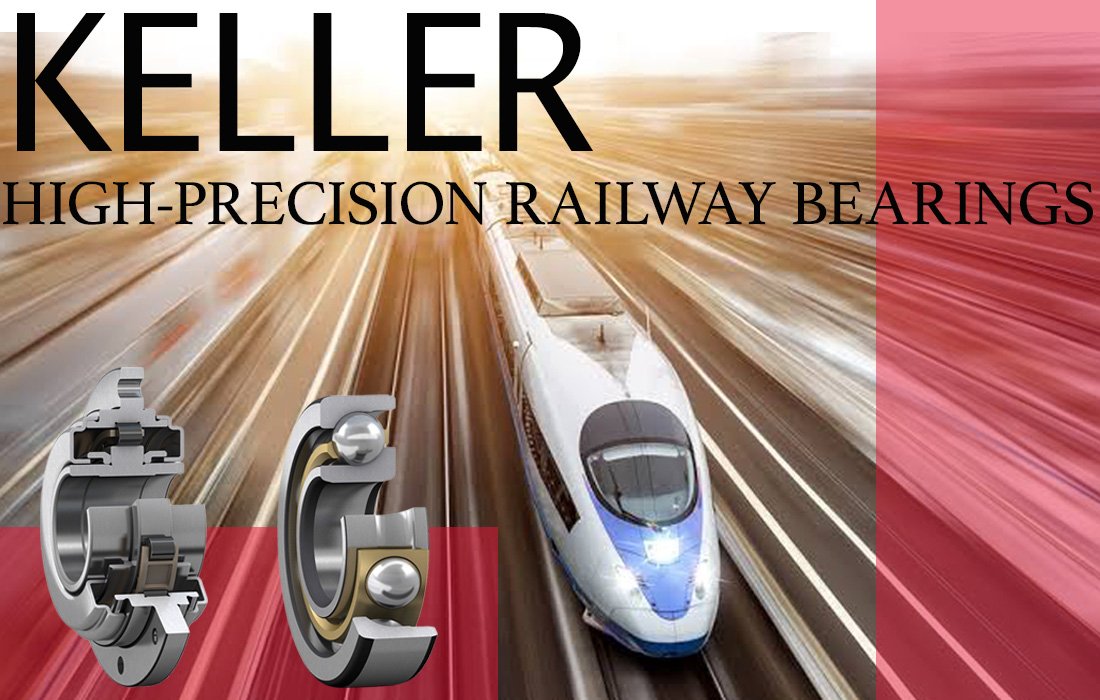
Heavy-duty railways transport large quantities of coal, ore, steel, and other goods. Freight cars have large load capacities and travel long distances. Bearings need to withstand continuous high loads and complex operating conditions.
Heavy-duty railway bearings are crucial components of freight car wheelset systems. They directly affect vehicle stability, maintenance costs, and transportation efficiency. Therefore, heavy-duty railways place higher demands on bearings.
1. High Load Capacity
Heavy-duty freight cars have large axle loads. Wheelset bearings need to withstand high radial loads. Simultaneously, vehicle operation generates axial loads.
Therefore, heavy-duty railway bearings need to possess high load capacity. A well-designed internal structure can improve load distribution. High-quality materials also improve bearing fatigue life.High load capacity helps bearings adapt to long-distance transportation. It also reduces the risk of abnormal wear.
2. Excellent Fatigue Resistance
Heavy-duty freight cars typically operate for extended periods. Bearings need to withstand repetitive loads for long periods.Long-term cyclic loads affect bearing life. The quality of the bearing steel, heat treatment process, and machining precision all affect fatigue resistance.High-quality railway freight car bearings require stable material properties. Manufacturers also need to strictly control heat treatment and machining processes.
3. Good Wear Resistance
Heavy-haul railway transportation increases the workload on bearings. Prolonged operation also increases wear on rolling contact surfaces.Good wear resistance extends the bearing’s service life and reduces maintenance frequency.Bearing rings and rolling elements need to maintain good surface quality. Proper lubrication also reduces friction and wear.
4. Stable Lubrication Performance
Lubrication is crucial for heavy-haul railway bearings.Good lubrication reduces friction and helps control operating temperature.Heavy-load conditions increase bearing heat generation. Therefore, manufacturers need to select appropriate greases based on operating speed, load, and ambient temperature.A proper lubrication scheme improves bearing operational stability and also helps extend bearing life.
5. Adaptability to Complex Operating Environments
Railway freight cars may experience high temperatures, low temperatures, rain, snow, and dust. Bearings need to adapt to different external conditions.Good sealing design reduces the entry of moisture and dust into the bearing. Stable material properties also help bearings adapt to temperature changes.This is especially important for mining railways and long-distance freight lines.
6. Strict Quality Control
Heavy-haul railway bearings require consistent product quality. Manufacturers need to control every stage of production.Raw materials, heat treatment, grinding, assembly, and testing all affect bearing performance.Companies also need to test parameters such as bearing dimensions, clearance, rotational accuracy, vibration, and noise. Strict quality management helps customers obtain more consistent products.
7. Reduced Railway Operating Costs
Bearing life affects the maintenance cycle of railway vehicles. Reliable bearings can reduce replacement frequency.This not only reduces spare parts costs but also reduces vehicle downtime.For heavy-haul railway operators, bearings not only need to meet load-bearing requirements but also need to consider service life, maintenance efficiency, and overall cost.
Conclusion
Heavy-haul railway bearings need to withstand high loads, long distances, and complex environments. High load-bearing capacity, fatigue resistance, wear resistance, and stable lubrication are important indicators.
Meanwhile, manufacturers need to strengthen material control, precision machining, and product testing. Choosing the right heavy-duty railway bearings can help railway freight cars maintain stable operation and improve freight efficiency.


