
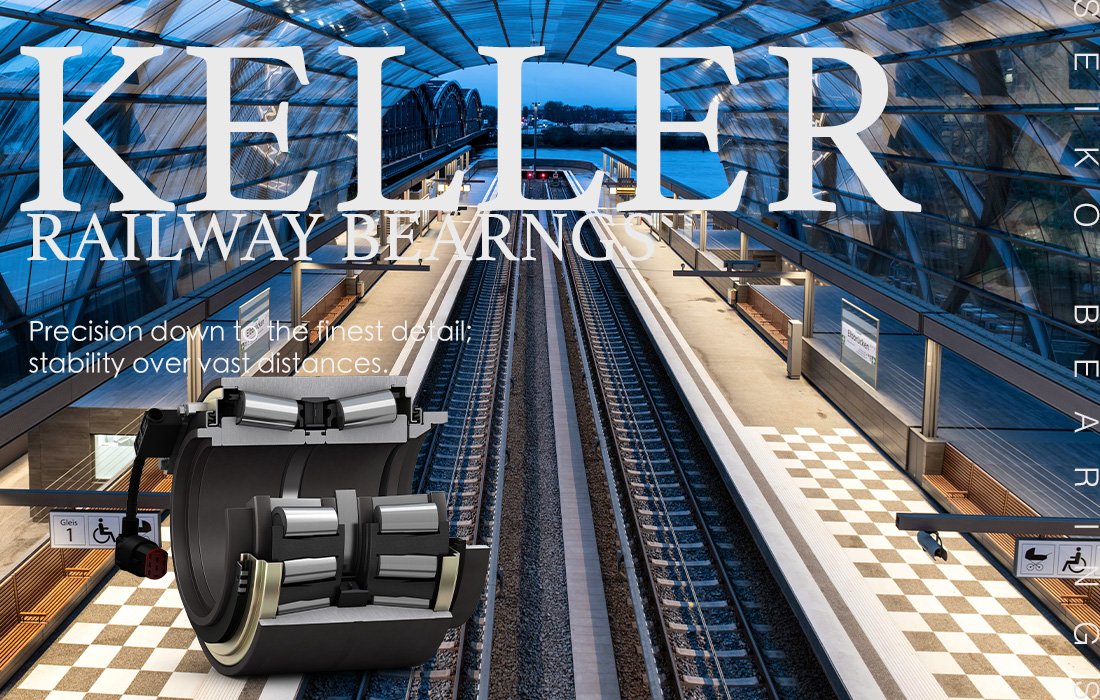
Flanged bearing units for railways are primarily used in railway rolling stock and rail transit equipment. By integrating the bearing with a flange structure, they meet specific mounting requirements. These units must withstand both radial and axial loads during operation while accommodating continuous vibration and fluctuating speeds.
Railway vehicles operate over extended periods. The bearing units must ensure stable rotation and minimize operational friction. An optimized structural design helps maintain peak equipment performance and simplifies routine inspection and maintenance.
The flanged design ensures precise mounting and positioning. It mates securely with the corresponding mounting interface, maintaining a stable connection. This configuration enhances installation efficiency, particularly in railway equipment where space is limited.
1. Flange Structure Facilitates Mounting and Positioning
These units feature an integrated design combining the bearing and the flange. The flange provides a stable mounting interface, ensuring the bearing unit remains correctly positioned.
Compared to standard bearing configurations, the flanged design is better suited to specific installation spaces. An optimized mounting method reduces the need for adjustments and simplifies subsequent inspections.
The bearing body handles the primary operational loads, while the flange structure manages connection and positioning. Together, they meet the stability requirements for railway vehicle installations.
2. Adaptability to Diverse Railway Operating Environments
Railway vehicles experience continuous vibration during operation, and different routes present varying operating conditions. Consequently, railway bearing units must demonstrate excellent stability and durability.
These flanged bearing units are suitable for passenger coaches, freight wagons, urban rail transit vehicles, and other rail equipment. Each application entails specific requirements regarding load capacity, rotational speed, and mounting dimensions.
High-speed operations require careful management of rotational speed and temperature rise, whereas freight applications prioritize load-bearing capacity. Urban rail transit equipment typically requires a balance between operational stability and ease of maintenance.
3. Sealing and Lubrication Impact Operational Performance
Railway equipment often operates in challenging environments where dust, moisture, and temperature fluctuations can affect bearing performance. An appropriate sealing structure minimizes the ingress of external contaminants.
Lubrication also plays a critical role in performance. Proper lubrication reduces friction and helps control the temperature rise during operation. Selecting an appropriate lubrication scheme based on actual speed, load, and environmental conditions helps ensure stable bearing operation.
4. Selecting the Right Model Based on Operating Conditions
When selecting flanged bearing units for railway applications, it is essential to consider the installation location and vehicle operating conditions. Key parameters include bearing dimensions, flange dimensions, load ratings, and rotational speeds.
Additionally, factors such as operating temperature, sealing configuration, and lubrication method must be taken into account. Since different railway equipment offers varying installation spaces, product dimensions must align precisely with the actual structural design.
Proper selection of flanged bearing units for railways minimizes the need for installation adjustments and supports stable equipment operation. Clear product specifications also facilitate model selection and subsequent maintenance for technical personnel.


