
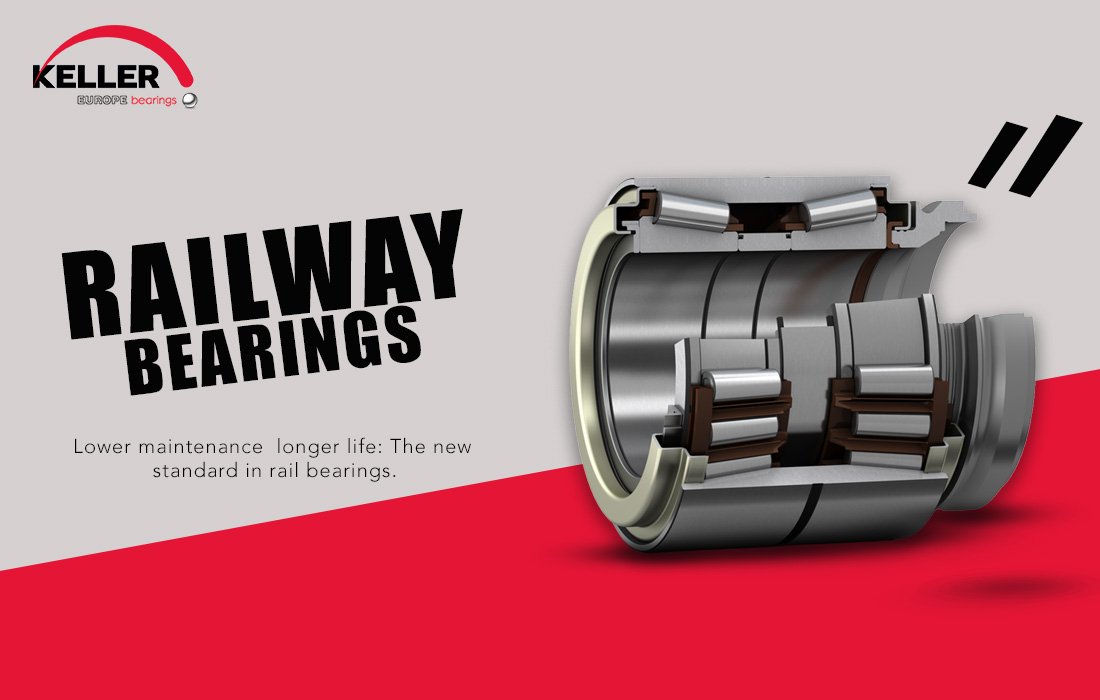
Railway bearing rollers bear significant rolling contact loads. During train operation, the rollers are subjected to continuous pressure, friction, and vibration. Consequently, the material used for the rollers directly impacts the performance of the railway bearing.
Railway bearing rollers typically utilize high-carbon chromium bearing steel. Common grades include GCr15 and GCr15SiMn. These materials offer high hardness and wear resistance, while also meeting stringent requirements for contact fatigue strength.
1. GCr15 Bearing Steel
GCr15 is a common high-carbon chromium bearing steel known for its good hardness and wear resistance.
With appropriate heat treatment, GCr15 achieves a stable microstructure, allowing the rollers to maintain excellent dimensional stability.
GCr15 is suitable for a wide range of rolling bearings and is frequently used for precision components such as railway bearing rollers.
2. GCr15SiMn Bearing Steel
GCr15SiMn possesses high hardenability, making it suitable for larger bearing components.
Railway vehicle bearings must withstand heavy loads, requiring the rollers to maintain sufficient hardness and strength.
GCr15SiMn meets the demands of certain heavy-load operating conditions; specific material selection depends on bearing dimensions and operational parameters.
3. Material Requirements for Railway Bearing Rollers
Railway bearing rollers are subjected to long-term cyclic loading; therefore, the material must possess high contact fatigue strength.
Wear resistance is equally critical, as it minimizes surface wear on the rollers.
Good toughness is also essential. Railway vehicles generate impacts and vibrations, and adequate toughness reduces the risk of premature material damage.
Material cleanliness is vital as well; non-metallic inclusions within the steel can adversely affect the fatigue performance of the rollers.
4. Impact of Heat Treatment on Roller Performance
Material grade alone does not determine overall performance; heat treatment plays a crucial role.Proper quenching and tempering processes increase roller hardness and refine the material’s microstructure.
The rollers require high surface hardness while maintaining appropriate internal toughness.A stable heat treatment process helps control dimensional changes and enhances the long-term operational performance of the rollers.
5. Requirements for Roller Materials in High-Speed Rail
High-speed trains place higher demands on bearings. Rollers must withstand high-speed rotation and continuous cyclic loading.
High-speed operation increases friction and temperature rise; therefore, roller materials must maintain stable performance.
Consequently, bearings for high-speed rail place greater emphasis on material cleanliness, fatigue strength, hardness, and dimensional stability.
6. How to Select Roller Materials for Railway Bearings?
Material selection must be based on actual operating conditions. Designers need to consider bearing dimensions, loads, rotational speeds, and the operating environment.
Operating conditions differ between standard railway vehicles and high-speed trains; different applications require specific material and heat treatment solutions.
Proper material selection enhances roller wear resistance and fatigue life, helping to ensure the stable operation of railway bearings.
Conclusion
Railway bearing rollers typically utilize high-carbon chromium bearing steel, with GCr15 and GCr15SiMn being common choices.
Roller performance depends on more than just the material grade; material cleanliness, heat treatment, and machining precision are equally important.
For high-speed and heavy-load railway applications, a comprehensive assessment of material properties and actual operating conditions is required. Selecting the right roller material lays a crucial foundation for the stable operation of railway bearings.


