
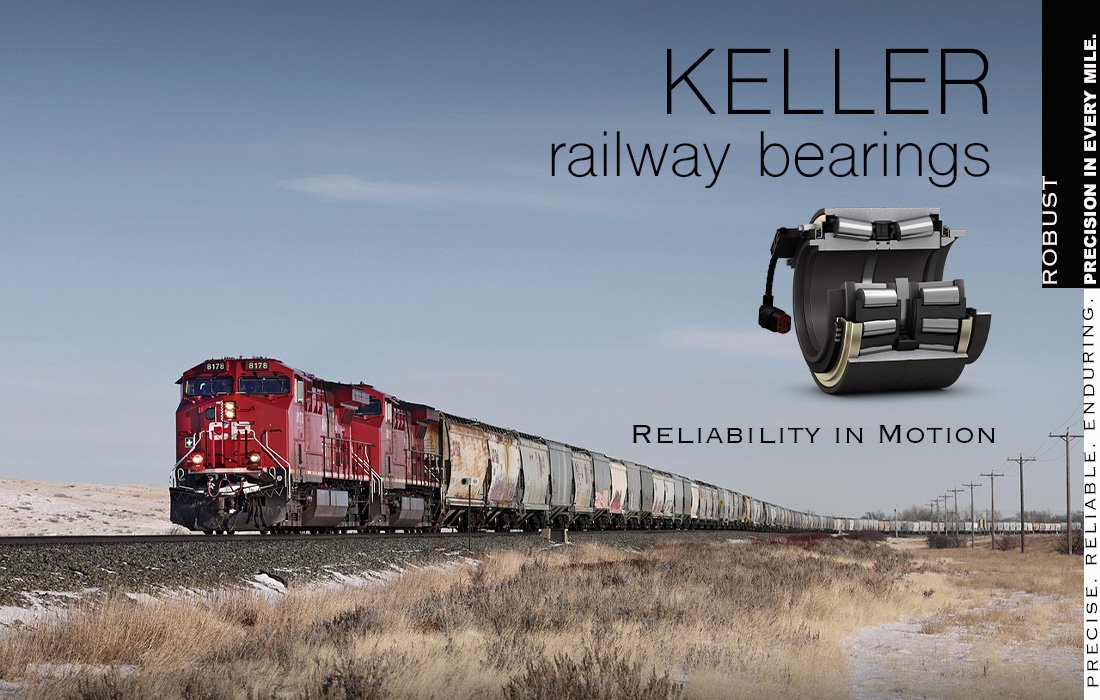
Railway bearing cages are responsible for guiding and separating the rollers, maintaining proper spacing between them, and ensuring stable roller operation.
During train operation, cages are subjected to centrifugal forces, vibration, and friction. High-speed operation also leads to significant temperature rises. Therefore, cage materials must possess excellent strength, wear resistance, and dimensional stability.
1. Common Materials for Railway Bearing Cages
Common materials for railway bearing cages include steel, brass, and engineering plastics. Each material offers distinct characteristics.
Steel cages offer high strength, making them suitable for withstanding heavy loads and impacts.
Brass cages provide excellent wear resistance and good dimensional stability.
Engineering plastic cages are lightweight, which reduces the cage’s inertia. Some of these materials also offer good self-lubricating properties.
2. Steel Cages
Steel cages possess high mechanical strength, enabling them to withstand the vibrations and impacts encountered during railway vehicle operation.
Steel also offers good fatigue resistance. Optimized structural design can further enhance the cage’s operational stability.
Steel cages are suitable for certain heavy-load railway bearings. For high-speed and high-load applications, cage strength and temperature rise are critical considerations.
3. Brass Cages
Brass cages offer excellent wear resistance and can withstand high operating temperatures.
Brass has good machinability, making it suitable for bearing designs that demand high cage strength and stability.
However, brass has a relatively high density; therefore, the cage’s weight and the effects of centrifugal force must be carefully considered for high-speed applications.
4. Engineering Plastic Cages
Engineering plastics are lightweight, which helps reduce cage inertia.
Some engineering plastics also offer excellent wear resistance and self-lubricating properties, helping to minimize friction and operational noise.
High-speed railway bearings place stringent demands on cage materials. Materials must maintain stable mechanical properties while adapting to temperature fluctuations and lubrication conditions.
5. Material Requirements for Railway Bearing Cages
Cage materials must possess sufficient strength and good toughness.
Wear resistance is equally important, as the cage is in constant contact with the rollers; excessive wear can compromise bearing performance.
Dimensional stability is also a critical factor. Temperature fluctuations can cause changes in material dimensions; therefore, the material must be suitable for the operating temperatures of railway bearings.
Additionally, the cage material must be compatible with the grease or lubricating oil. Proper material selection helps minimize material aging and performance degradation.
6. How to select cage materials?
Material selection depends on the bearing structure and operating conditions.
High-speed rail applications prioritize cage weight, strength, and temperature rise, whereas heavy-haul rail applications focus more on mechanical strength and impact resistance.
Steel, brass, and engineering plastics each have distinct characteristics. Practical applications require a comprehensive assessment of rotational speed, load, temperature, lubrication method, and bearing dimensions.
Selecting the appropriate cage material ensures stable bearing operation and helps extend the bearing’s service life.
Conclusion
Railway bearing cages can be made from materials such as steel, brass, and engineering plastics, with different materials suited to specific operating conditions.
High-speed, heavy-haul, and high-temperature environments impose varying requirements on the cage, necessitating material selection based on actual operating conditions.
The right cage material improves roller performance and enhances the stability and reliability of railway bearings.


