
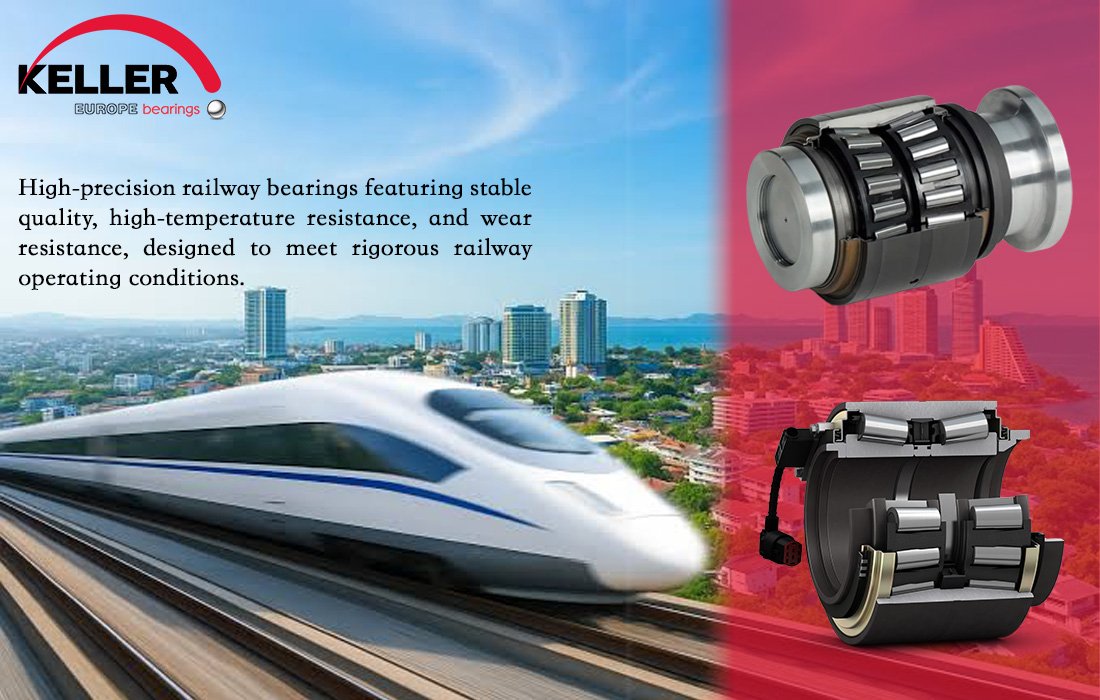
Railway bearing model numbers convey essential product information. Buyers can determine the bearing type, dimensions, and structural design from the model number. Therefore, understanding the designation rules is crucial.
While different manufacturers may employ varying standards, common models in the international market generally follow a unified numbering logic. This allows buyers to quickly make an initial selection based on the model number.
Common Railway Bearing Models
Railway vehicles commonly utilize cylindrical roller bearings, tapered roller bearings, and ball bearings. Additionally, there are specific models for axle box bearings, wheelset bearings, and traction motor bearings.For instance, common cylindrical roller bearing models include the NU, NJ, and NUP series. Different structural designs offer varying axial locating capabilities; thus, buyers must select a model based on the specific installation method.
Model numbers for tapered roller bearings typically consist of a combination of numbers and letters—common series include 322, 323, and 330. Buyers should consult the manufacturer’s product catalog for specific dimensions and structural details.Axle box bearings for railway vehicles may feature specialized designs tailored to axle dimensions, load requirements, and vehicle type. Consequently, buyers cannot select a product based solely on a single number.
How to Interpret Railway Bearing Model Numbers
Railway bearing model numbers generally consist of a basic designation and a suffix. The basic designation primarily indicates the bearing type and dimension series.First, letters often denote the bearing structure; for example, N, NU, and NJ are commonly used for cylindrical roller bearing series.Second, numbers indicate the dimension series and bore diameter. Numbering rules vary across standards, so buyers should refer to the specific standard applicable to the product.
Additionally, letters or numbers following the basic designation usually indicate special features or structural variations—such as seals, cage types, internal clearance, and precision classes.
Meaning of Railway Bearing Suffixes
Suffixes in railway bearing model numbers are significant, as they indicate specific bearing characteristics or performance features.For example, “C3″ typically denotes greater internal radial clearance; equipment operating at high speeds or elevated temperatures may require specific clearance levels.”2RS” is commonly used to indicate contact seals on both sides, while “ZZ” or “2Z” usually denotes dust shields on both sides. Specific designations may vary by brand. Furthermore, designations such as P6 and P5 typically relate to precision classes. Higher precision classes generally entail stricter requirements for bearing dimensions and rotational accuracy.Therefore, purchasers must carefully verify model suffixes; even a single-letter difference can indicate distinct product performance characteristics.
Railway Bearing Models and Dimensions
Bearing models are closely linked to dimensions, such as inner diameter, outer diameter, and width.For instance, a purchaser must first confirm the axle diameter, followed by the bearing’s outer diameter and the available installation space. The bearing width must also be verified.Additionally, load and rotational speed influence model selection; thus, railway bearings should not be selected based on dimensions alone.
How to Confirm Railway Bearing Models for International Procurement?
First, the purchaser should provide the original bearing model number. If the original model is unavailable, the bearing dimensions may be provided instead.Second, the vehicle type must be specified—such as an electric multiple unit (EMU), high-speed train, locomotive, passenger coach, or freight wagon.Next, operating speed and load requirements must be provided. Any special lubrication or insulation structures used in the equipment should also be disclosed in advance.Finally, the supplier can determine the appropriate model based on these parameters. Consequently, comprehensive technical data helps minimize procurement errors.
Conclusion
Railway bearing model numbers contain a wealth of information. Basic codes help purchasers identify the bearing type and dimensions, while suffixes indicate parameters such as sealing, internal clearance, and precision class.Understanding the naming conventions for railway bearing models helps overseas customers improve procurement efficiency and reduces the risk of selecting the wrong model.
Since different brands and standards may employ varying numbering systems, it is advisable to consult the manufacturer’s catalog and technical documentation prior to purchase. This ensures an accurate match between the bearing model and the railway equipment.


