
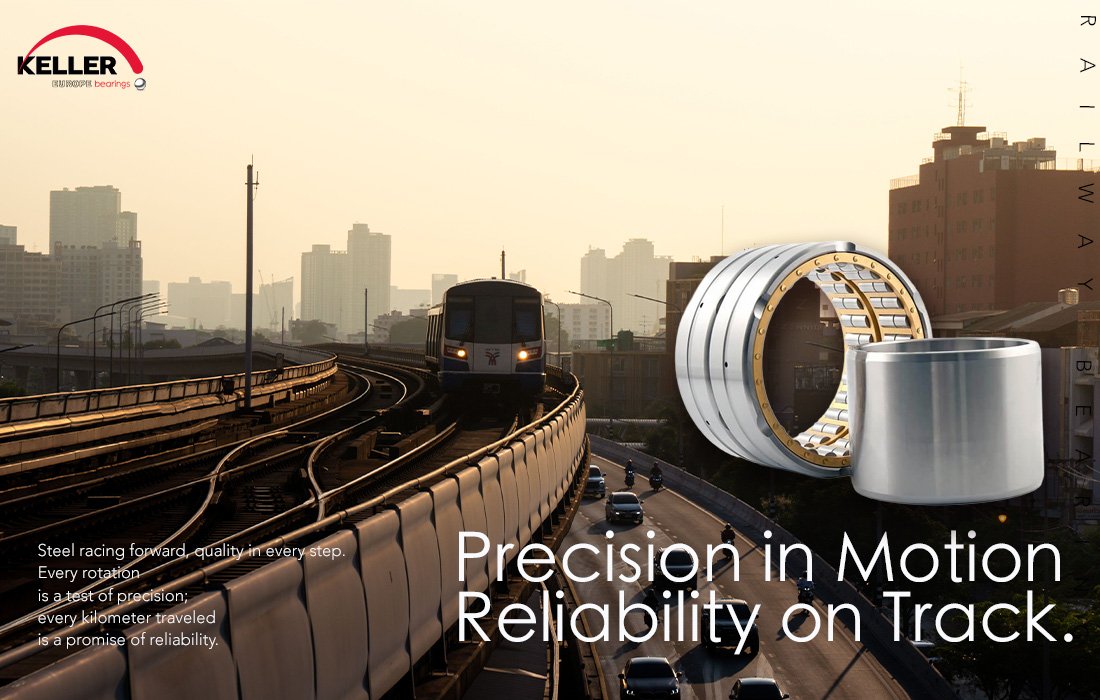
Double-row cylindrical roller bearings feature a structure with two rows of cylindrical rollers. The two rows of rollers provide high radial load-carrying capacity, making these bearings suitable for heavy radial loads and continuous industrial operation.
The cylindrical rollers form line contact with the raceways, creating a large contact area. This optimized structure distributes the operating load effectively, ensuring stable bearing performance.
Structural Features
Double-row cylindrical roller bearings primarily consist of an inner ring, an outer ring, rollers, and a cage. The two rows of rollers are arranged parallel to each other along the raceways, a configuration that enhances radial rigidity.
Different models utilize varying internal structures; some allow for the separation of the inner or outer ring. This design facilitates installation and maintenance, allowing users to select the model best suited to their equipment’s configuration.
Key Advantages
Double-row cylindrical roller bearings offer high radial load-carrying capacity, making them ideal for heavy-duty machinery. The dual-row roller arrangement distributes the load, ensuring stable operation.
These bearings also exhibit excellent radial rigidity. Optimized internal clearance accommodates various operating conditions, while appropriate lubrication minimizes friction and temperature rise.
Applications
Double-row cylindrical roller bearings are suitable for a wide range of industrial equipment. Common applications include gearboxes, speed reducers, and electric motors, as well as machine tools, pumps, and industrial transmission systems.
In heavy machinery, where bearings must withstand significant radial loads, the double-row cylindrical roller design provides reliable support. They are also well-suited for use in metallurgical equipment, mining machinery, and large-scale transmission systems.
Dimensions and Parameters
When selecting a bearing, it is essential to verify the inner diameter, outer diameter, and width. The installation space must accommodate the bearing’s dimensions. Users should also consider the basic dynamic and static load ratings.
Operating speed is another critical parameter; high-speed applications require attention to limiting speeds and lubrication conditions, while high-temperature environments necessitate the selection of an appropriate lubrication method. How to Select Double-Row Cylindrical Roller Bearings
First, determine the shaft diameter of the equipment, then confirm the housing dimensions. Calculate the radial load based on actual operating conditions. Finally, select the bearing model by factoring in the rotational speed.
If the equipment operates continuously for long periods, consider the operating temperature. In dusty environments, pay attention to sealing and protection. Proper selection enhances equipment operational stability.
Installation and Maintenance of Double-Row Cylindrical Roller Bearings
Clean the bearing and mounting surfaces before installation. Verify that the shaft and housing meet specifications. Use appropriate tools for installation, and avoid striking the rollers or cage directly.
Ensure proper lubrication during operation. Regularly monitor bearing temperature, vibration, and operating noise. Inspect the equipment promptly if any abnormalities are detected.Correct installation and regular maintenance extend bearing service life. Proper lubrication also helps reduce operational losses.
Suitable Operating Conditions for Double-Row Cylindrical Roller Bearings
Double-row cylindrical roller bearings are suitable for applications involving high radial loads and are ideal for industrial machinery requiring continuous operation. For equipment with space constraints, select the appropriate model based on installation dimensions.
Different equipment has varying load and speed requirements; therefore, selection should comprehensively consider dimensions, load, speed, and lubrication conditions.


