
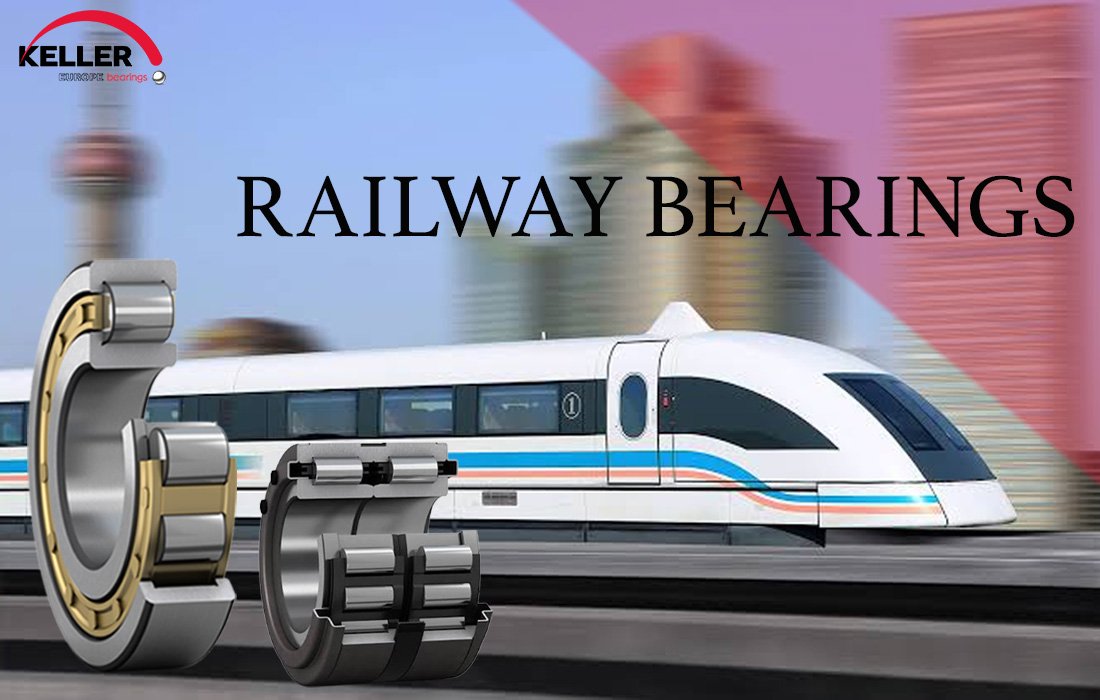
High-speed trains need to operate at high speeds for extended periods. The higher the train speed, the greater the load on the bearings. The bearings of high-speed trains directly affect the wheelsets, bogies, and the overall running condition of the vehicle. Therefore, the bearings need to possess high precision, high reliability, and long service life.So, how are the bearings of high-speed trains ensured to operate safely?
1. High-Precision Manufacturing Ensures Stable Operation
High-speed train bearings have very high requirements for dimensional and rotational accuracy. The bearing rings, rolling elements, and cages all require strict control over machining errors.
High-precision manufacturing reduces vibration during bearing operation. It also reduces noise and friction. Smoother bearing operation leads to more stable vehicle operation.For high-speed railway bearings, stable rotational performance is crucial. Even with long-term high-speed train operation, the bearings need to maintain good operating conditions.
2. High-Performance Materials Enhance Bearing Reliability
Railway bearings need to withstand large radial and axial loads. High-speed operation also generates high temperature rises.
Therefore, high-speed train bearings require high-quality bearing steel and appropriate heat treatment processes. Superior materials improve bearing strength, wear resistance, and fatigue life.Material properties directly affect the service life of railway bearings. Stable material quality also helps reduce the risk of early bearing failure.
3. Optimized Design Reduces Operational Risks
Bearing design needs to be tailored to the actual operating conditions of the train. Designers need to consider speed, load, temperature, lubrication, and installation conditions.A reasonable internal structure can improve load distribution. It can also reduce friction between rolling elements and raceways.Bogie bearings typically operate under complex conditions. Therefore, bearing design needs to balance high-speed, heavy-load, and long-term operational requirements.
4. Efficient Lubrication Controls Operating Temperature
Lubrication is a crucial aspect of high-speed train bearings.Good lubrication reduces friction and wear. It also helps control bearing temperature.
At high speeds, bearings generate more heat. Insufficient lubrication can cause the temperature to rise continuously, potentially affecting normal bearing operation.Therefore, railway bearings require the selection of appropriate greases. Simultaneously, a reasonable lubrication cycle needs to be established based on the operating environment.
5. Strict Quality Control During Testing
Railway bearings require rigorous quality testing.Companies typically test parameters such as bearing dimensions, rotational accuracy, clearance, vibration, and noise. Material quality and internal defects also need to be monitored.
Quality control during the production process is equally important. From raw materials to finished products, every step needs to maintain stability.Strict testing can promptly identify product problems. It also helps railway bearings achieve stable performance requirements.
6. Regular Maintenance to Extend Service Life
High-quality bearings also require proper maintenance.Railway operators need to conduct inspections based on vehicle mileage and operating conditions. Maintenance personnel need to monitor bearing temperature, vibration, noise, and lubrication status.Upon discovering abnormalities, the cause needs to be investigated promptly. Timely maintenance can reduce equipment failures and improve the operational safety of high-speed trains.
Conclusion
High-speed train bearings are crucial components of railway vehicles. They bear significant loads and rotational tasks.High-precision manufacturing, high-performance materials, rational design, stable lubrication, and rigorous testing all contribute to bearing safety. Scientific maintenance is equally crucial.
For railway bearing manufacturers, stable product quality is the core competitiveness. Only by continuously improving manufacturing technology and quality control capabilities can they provide more reliable bearing products for high-speed railways and rail transit.


