
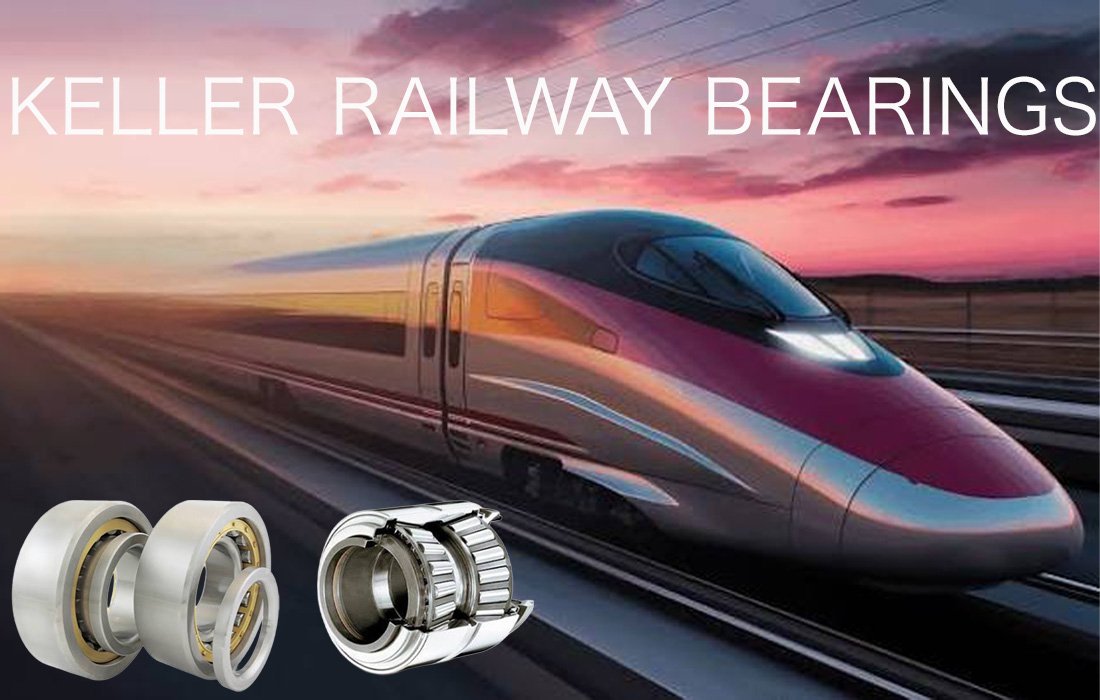
Railway bearings directly affect the operational stability of vehicles; therefore, selecting the appropriate bearing model is crucial. Different vehicles operate under different conditions. For instance, electric multiple units (EMUs), locomotives, passenger coaches, and freight wagons differ in terms of operating speeds, loads, and track conditions. Consequently, purchasers must select bearings based on actual operating conditions.
1. Selection based on vehicle type
First, the type of railway vehicle must be identified. EMUs typically operate at high speeds, so their bearings require excellent high-speed performance.
Locomotives perform traction duties, requiring bearings with high load-carrying capacity. Freight wagons primarily transport heavy cargo, necessitating bearings with superior wear and impact resistance.Passenger coaches prioritize smooth operation, requiring bearings that produce minimal vibration and noise.
2. Selection based on operating speed
Next, the vehicle’s operating speed must be considered. High-speed trains generate high bearing rotational speeds, so the bearings must be capable of high-speed rotation.Additionally, high-speed operation raises bearing temperatures; therefore, purchasers must pay attention to the bearing’s limiting speed and lubrication conditions.
If a vehicle operates at high speeds for extended periods, a bearing model with superior high-speed performance should be selected.
3. Selection based on load
Load is a critical parameter in bearing selection. During operation, railway bearings must support the vehicle’s weight.Furthermore, starting, braking, and cornering generate additional loads. Purchasers must therefore consider both radial and axial loads.
Heavy-duty freight wagons require high load-carrying capacity; consequently, products such as cylindrical roller bearings or tapered roller bearings are suitable options.
4. Selection based on installation location
Bearing models vary depending on their installation location. Common locations include axle boxes, wheelsets, bogies, traction motors, and gearboxes.For example, axle box bearings primarily support wheelsets and axles, so they must withstand significant vehicle loads.
Gearbox bearings must withstand loads generated by gear meshing; therefore, the model selection should take the gearbox structure into account.
5. Selection based on operating temperature
Railway vehicles operate in diverse climatic environments. High-temperature regions can lead to increased bearing temperature rise. Low-temperature environments can affect grease performance.
Therefore, purchasers need to verify the operating temperature range and select appropriate bearing materials and lubrication schemes.For high-speed trains, controlling temperature rise is also a critical factor.
6. Selection based on bearing clearance
Bearing clearance affects operational performance. Excessive clearance can lead to increased vibration, while insufficient clearance may result in higher friction and operating temperatures.
Consequently, purchasers must select the appropriate clearance based on rotational speed, temperature, and installation conditions.Common clearance classes include CN and C3; the specific choice depends on actual operating conditions.
7. Selection based on precision and sealing requirements
High-speed rail applications typically demand high rotational precision, so purchasers need to consider the bearing’s precision class.Additionally, railway vehicles are exposed to dust, rain, and debris, necessitating bearings with excellent sealing capabilities.Furthermore, traction motors may require insulated bearings to mitigate the risk of electrical erosion caused by shaft currents.
What information is required for international procurement?
When submitting an inquiry, overseas customers can provide the original bearing model number. If the model number is unavailable, providing the inner diameter, outer diameter, and width is sufficient.
It is also advisable to provide details regarding the vehicle type, installation position, operating speed, and load.Information on operating temperature, lubrication method, and the service environment is also helpful. The more comprehensive the information, the easier it is for the supplier to identify the correct bearing model.
Conclusion
Selecting a railway bearing model involves more than just considering dimensions. First, the vehicle type must be identified. Next, factors such as speed, load, installation position, and temperature need to be analyzed.
Considerations regarding clearance, precision, sealing, and lubrication requirements are also essential. Only through a comprehensive analysis of actual operating conditions can the appropriate railway bearing model be selected.
For overseas purchasers, providing complete operational data improves the efficiency of the selection process, minimizes procurement errors, and helps ensure stable vehicle operation.


