
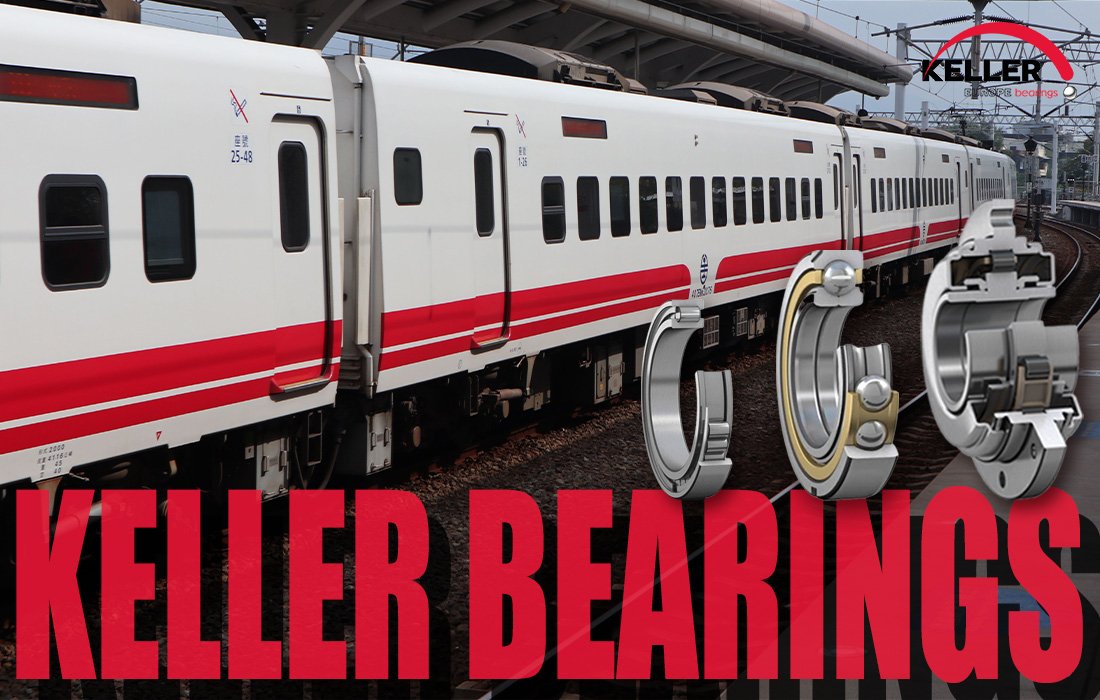
Integrated railway bearing units are critical components of the running gear in railway vehicles. They primarily connect the axle to the wheelset and support the radial and axial loads generated during vehicle operation. As railway vehicles operate for extended periods, these bearing units must maintain stable rotation while withstanding continuous vibration and diverse track environments.
An optimized integrated structure simplifies assembly and facilitates routine inspection and maintenance. Furthermore, the product specifications—such as dimensions, load capacity, and rotational speed—must be matched to the specific vehicle type and operating conditions.
1. Integrated Structure Enhances Operational Stability
Integrated railway bearing units feature a compact, unified design that reduces the number of components. This consolidated structure is well-suited to the limited installation space available on railway vehicles.
Vehicles are subject to continuous vibration and multi-directional loads during operation. The bearing unit must maintain robust load-bearing capacity while controlling friction and temperature rise. A well-designed structure enables the bearing to withstand the demands of long-term operation.
2. Wide Application Across Railway Vehicle Types
Integrated railway bearing units are suitable for a variety of applications, including passenger coaches, freight wagons, electric multiple units (EMUs), and urban rail transit vehicles.
Different vehicles have distinct operational characteristics. High-speed rail applications prioritize high rotational speeds, temperature control, and long-term stability. Freight vehicles typically handle heavier axle loads, making load-bearing capacity a primary concern. Urban rail transit requires a balance between operational stability and maintenance efficiency.
Given the structural differences between vehicles, the selection of a bearing unit must take into account the specific installation space and operating conditions.
3. Sealing and Lubrication Affect Performance
Railway vehicles operate in complex environments where dust, moisture, and temperature fluctuations can impact bearing performance. An effective sealing structure minimizes the ingress of external contaminants.
Lubrication is another critical factor influencing operation. Proper lubrication reduces friction and manages the heat generated during use. Selecting the right lubrication strategy—based on speed, load, and environmental factors—helps ensure stable bearing performance.
4. Parameter Matching Determines Selection Suitability
Selecting an integrated railway bearing unit requires a comprehensive assessment of the vehicle type and actual operating conditions. Key parameters to consider include bearing dimensions, rated load, rotational speed, operating temperature, and lubrication method.
Applications in high-speed rail require a particular focus on the demands of high-speed operation. For freight vehicles, the primary focus is on load capacity and durability, whereas the selection for urban rail transit systems can be based on operating frequency and maintenance requirements.
Properly matching product specifications helps minimize abnormal wear and reduces the burden of future maintenance. A suitable integrated railway bearing unit ensures better compatibility with the vehicle’s running gear, providing stable support for long-term railway operations.


