
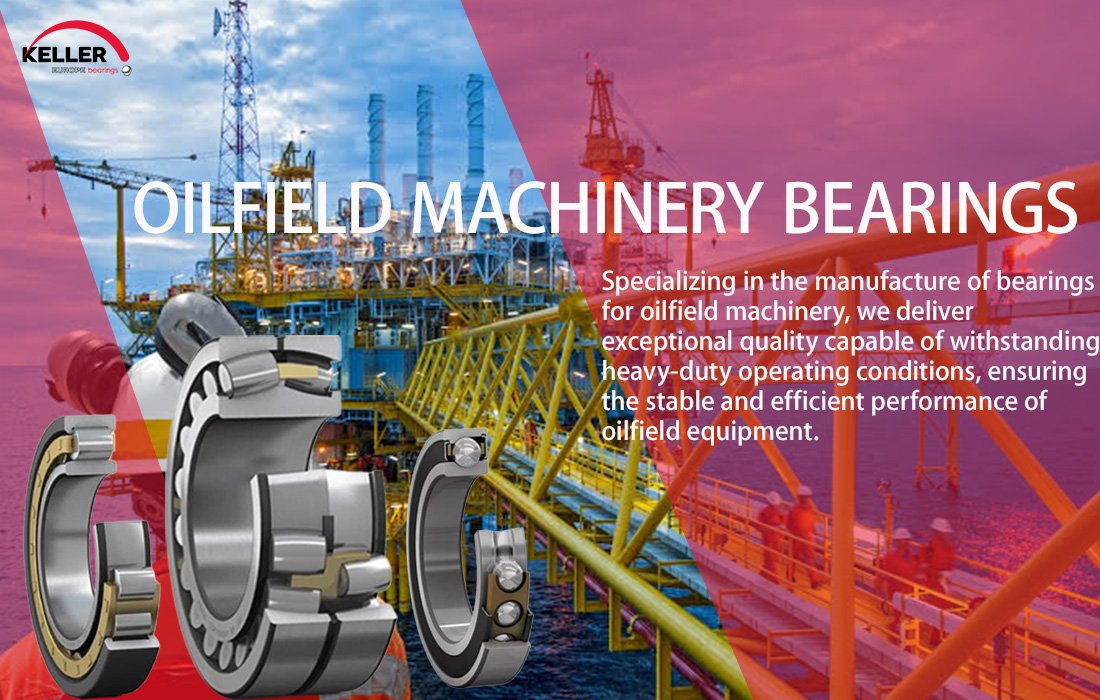
Bearings for petroleum machinery are widely used in drilling equipment, mud pumps, pumping units, fracturing equipment, oil transport equipment, and other oilfield machinery. Since operating loads, rotational speeds, temperatures, and environments vary significantly across different types of equipment, a single bearing model is not necessarily suitable for all operating conditions. Therefore, when purchasing these bearings, providing accurate and complete equipment and operating parameters helps technical staff quickly select the right model, thereby minimizing wear, heat generation, and premature failure caused by model mismatches.
So, what parameters are typically required when purchasing bearings for petroleum machinery?
I. Bearing Model
If the equipment has already been in use, the most direct information to provide is the bearing model number. With the complete model number, the manufacturer can preliminarily identify the bearing’s structure, dimensions, precision class, and relevant technical specifications.If the complete model number is unavailable, providing photographs of the bearing, details of the actual used bearing, or the equipment manual can assist the manufacturer in further verification.
II. Inner Diameter, Outer Diameter, and Width
For bearings without a specific model number, the inner diameter, outer diameter, and width are crucial basic dimensions.Typically, the bearing’s inner diameter, outer diameter, and overall width need to be measured. If the bearing has a special structure, additional details such as flange dimensions, mounting hole sizes, or other structural parameters are required. The more accurate the dimensional data, the easier it is for the manufacturer to match and verify the correct bearing.
III. Actual Load
Petroleum machinery often operates under heavy loads or even shock loads. Therefore, it is advisable to provide details regarding the equipment’s actual load conditions—including radial loads, axial loads, and the presence of shock loads—during the purchasing process.
If precise load figures are unavailable, providing information on the equipment’s purpose, operating mode, and general working conditions allows the manufacturer to make a technical assessment based on the actual application.
IV. Operating Speed
Bearing speed directly affects friction, temperature rise, and lubrication conditions. Different bearings have different speed capabilities; therefore, both the normal operating speed and the maximum speed of the equipment should be provided.For high-speed petroleum machinery, particular attention should also be paid to bearing temperature rise and the lubrication method.
V. Operating Temperature
Operating temperature is another critical factor in bearing selection. Standard, high-temperature, and low-temperature operating conditions impose different requirements on bearing materials, seals, and lubricants.If the equipment experiences significant temperature fluctuations, it is best to specify both the normal operating temperature and the maximum operating temperature; this enables the manufacturer to select the most suitable bearing materials and lubrication strategy.
VI. Installation Method
When purchasing bearings, it is also necessary to specify the installation method—such as the type of fit between the bearing and the shaft, whether it is mounted in a bearing housing or another structure, and whether there are specific axial positioning requirements.The installation method affects bearing clearance, fit precision, and operational stability; therefore, it cannot be overlooked.
VII. Lubrication Method
The manufacturer should be informed whether the equipment utilizes grease, lubricating oil, oil bath lubrication, or circulating oil lubrication. Additionally, if the specific lubricant type has already been determined, the specific model or grade can be provided.Proper lubrication conditions help reduce friction and temperature rise; consequently, the lubrication method is a crucial factor in bearing selection and service life assessment.
VIII. Equipment Model and Installation Location
Providing the specific equipment name, model, and bearing installation location allows the manufacturer to more accurately assess the bearing’s actual operating conditions.For instance, the load, vibration, and rotational speed profiles differ vastly depending on whether the bearing is used in drilling equipment, mud pumps, pumping units, fracturing pumps, or oil transport equipment.
IX. Operating Environment
Petroleum machinery often operates in complex environments; therefore, procurement specifications should indicate the presence of factors such as dust, mud, moisture, corrosive media, high temperatures, intense vibration, or shock loads.This information helps the manufacturer determine the appropriate bearing seal type, materials, surface treatments, and lubrication strategy.
X. Purchase Quantity and Delivery Requirements
In addition to technical specifications, it is advisable to provide details regarding purchase quantity, delivery lead times, packaging requirements, and any needs for inspection reports. For bulk orders, manufacturers can schedule production and quality inspections accordingly to improve supply efficiency.The more complete the procurement specifications, the more accurate the selection.
Purchasing bearings for petroleum machinery is not merely a matter of “stating a size and buying a bearing.” Especially for equipment subject to heavy loads, high temperatures, high speeds, or intense vibration, selecting a truly suitable product requires a thorough understanding of the actual operating conditions. When purchasing, it is generally recommended to provide at least the following details: bearing model, inner diameter, outer diameter, width, load, rotational speed, operating temperature, mounting method, lubrication method, equipment model, and operating environment. Providing additional information—such as equipment drawings, photos of old bearings, or records of past failures—enables the manufacturer to conduct a more precise technical analysis.
Selecting high-quality bearings for petroleum machinery that match actual operating conditions not only enhances equipment stability but also reduces abnormal wear, unexpected downtime, and long-term maintenance costs. Customers who do not have a complete bearing model number can simply provide their equipment specifications to a professional bearing manufacturer, and technical staff will assist in selecting the appropriate bearing.


