
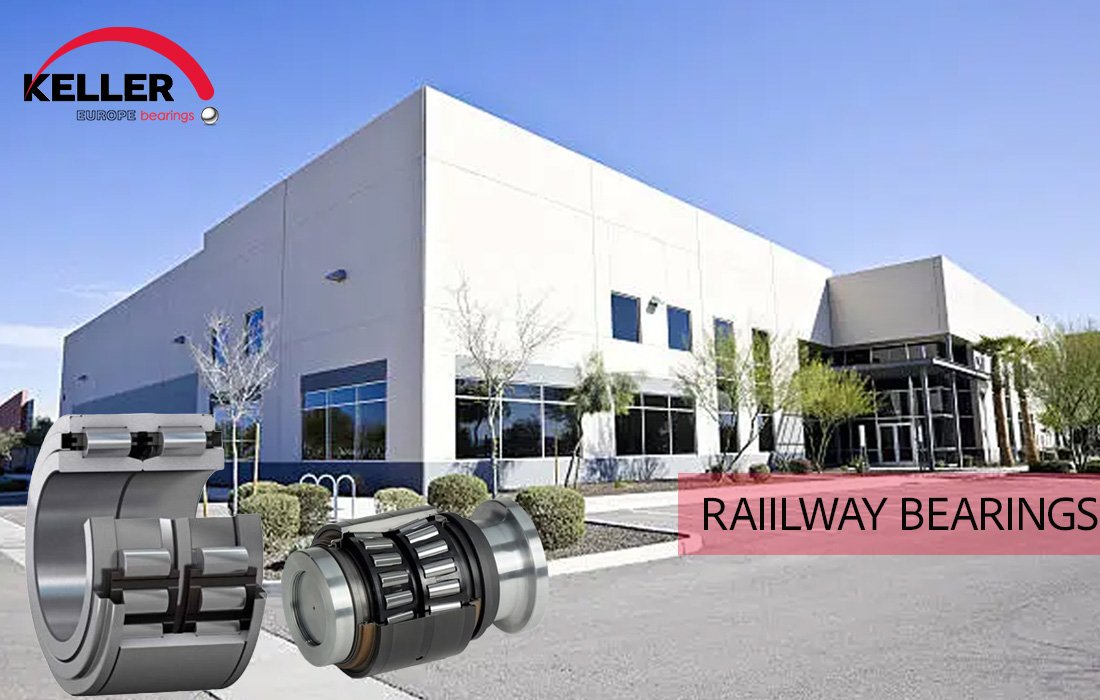
Railway gearbox bearings are vital components within the drive systems of rail vehicles, connecting the gearbox to the vehicle’s running gear. These bearings must withstand significant radial and axial loads while accommodating high-speed rotation, vibration, and temperature fluctuations.
With the advancement of high-speed rail and urban rail transit, performance requirements for railway gearbox bearings have become increasingly stringent. High reliability, extended service life, and low friction have emerged as key technical priorities.
Primary Functions of Railway Gearbox Bearings
The railway gearbox is responsible for transmitting the power required for vehicle operation. It houses critical components such as gears, shafts, and bearings. Railway gearbox bearings provide stable support for the rotating shafts.
Bearings reduce friction between the shaft and other components while maintaining the operational precision of rotating parts. Superior bearing performance helps minimize energy loss and reduce temperature rise during operation.
Bearings must maintain stable rotational performance at high speeds and withstand continuous vibration as the vehicle navigates curves, track joints, and complex track environments.
Performance Requirements for Railway Gearbox Bearings
Railway gearbox bearings must meet a variety of operational demands.
High load-carrying capacity is a critical requirement, as significant loads are generated during vehicle operation; the bearings must maintain stable load-bearing capabilities.
High-speed performance is equally important. Given the high speeds of modern trains, bearings must effectively manage friction and temperature rise. An optimized internal structure helps enhance performance at high speeds.
Extended service life reduces maintenance frequency. Bearings inevitably experience wear over long periods of operation; however, the use of high-quality materials, proper heat treatment, and effective lubrication strategies can prolong their operational lifespan.
Sealing performance also directly impacts bearing operation. Rail vehicles frequently encounter dust, moisture, and temperature fluctuations; effective sealing structures prevent external contaminants from entering the bearing assembly.
Common Types of Railway Gearbox Bearings
Various types of rolling bearings are used in railway gearboxes. The specific choice depends on factors such as load, rotational speed, spatial constraints, and the operating environment.
Cylindrical roller bearings offer excellent radial load-carrying capacity, making them suitable for applications involving heavy radial loads.
Tapered roller bearings are capable of simultaneously supporting both radial and axial loads. It is suitable for drive systems subjected to combined loads.
Deep-groove ball bearings are characterized by their compact design and smooth operation. Specific configurations are selected for railway drive systems based on particular design requirements.
The Importance of Lubrication for Railway Gearbox Bearings
Lubrication directly affects the operating condition of railway gearbox bearings. Proper lubrication reduces friction and helps control temperature rise.
Common lubrication methods for railway gearboxes include oil lubrication and grease lubrication. Designers must select the appropriate solution based on factors such as rotational speed, load, temperature, and structural design.
Lubricating oils and greases must maintain good stability. Excessive or insufficient lubricant can adversely affect bearing operation; therefore, proper lubrication management is crucial.
Condition Monitoring of Railway Gearbox Bearings
Condition monitoring provides insight into bearing performance. Temperature, vibration, and noise are common monitoring parameters.
Vibration signals may change when abnormal bearing wear occurs. A continuous rise in temperature may also indicate irregularities in lubrication or operating conditions.
Regular inspections allow for the early detection of potential issues. Data analysis helps assess bearing performance trends.
With the advancement of digital technology, railway bearing condition monitoring is evolving toward intelligent systems. Technologies such as sensors, data acquisition, and intelligent analysis enhance equipment management efficiency.
Development Trends for Railway Gearbox Bearings
Future developments in railway gearbox bearings will focus on high-speed capabilities, lightweight designs, and extended service life.
New materials and advanced heat treatment techniques can improve wear resistance, while precision machining enhances dimensional accuracy.
Intelligent monitoring technology will also play an increasingly important role. Real-time data collection—covering temperature, vibration, and rotational speed—enables more accurate assessment of bearing conditions.
Railway transport continues to evolve toward higher speeds, greater safety, and increased intelligence. Consequently, railway gearbox bearings are being upgraded for higher performance. Stable bearing operation ensures reliable support for the drive systems of rail vehicles.
Conclusion
Although railway gearbox bearings are small components within the vehicle, they perform critical support and power transmission functions.
High-speed operation, complex loads, and demanding long-term service environments place rigorous demands on these bearings. Optimizing bearing design, materials, lubrication, and monitoring technologies can further enhance the operational stability of railway drive systems. Railway gearbox bearings will continue to be a crucial component in the technological development of rail transit equipment.Railway Gearbox Bearings


