
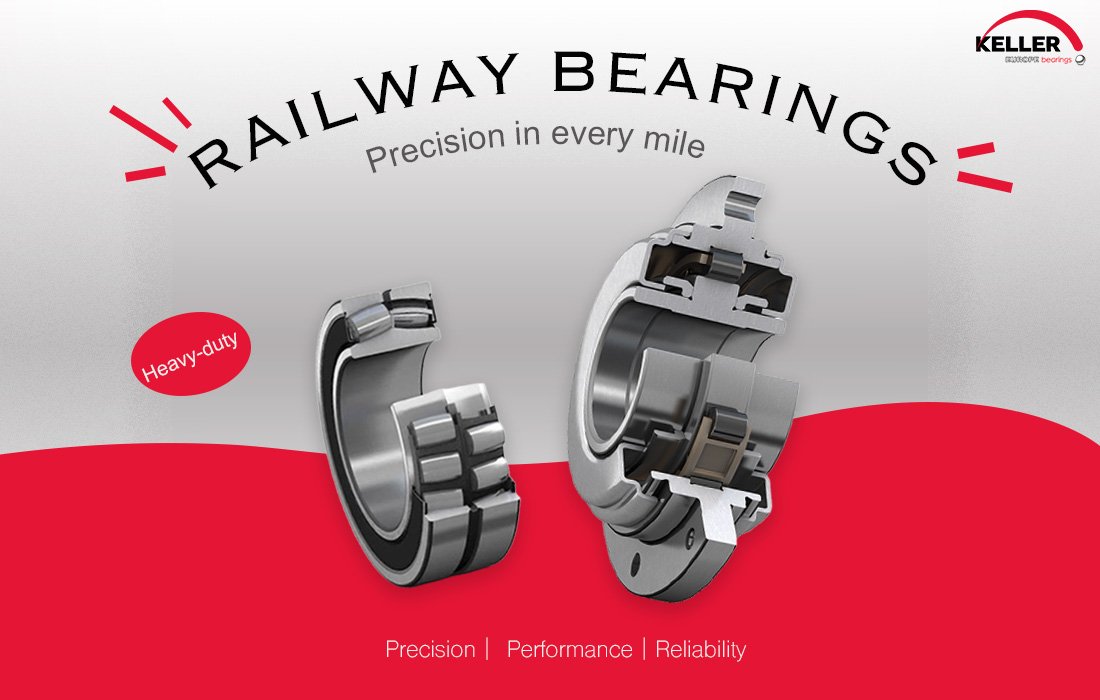
Railway bearings are subjected to high-speed rotation, heavy loads, impacts, and vibrations over long periods. The material directly affects the bearing’s strength, wear resistance, and service life. Different railway vehicles and operating conditions impose varying requirements on material properties.
What materials are commonly used for railway bearings?
Railway bearings typically utilize high-quality bearing steel. High-carbon chromium bearing steel is a common choice; this type of steel offers high hardness and wear resistance, and it can withstand significant contact stress.
Common materials include bearing steels such as GCr15 and GCr15SiMn. Some high-performance railway bearings also employ steels that have undergone special smelting and heat treatment processes.
Material selection must take into account the bearing structure and operating conditions. Bearings for high-speed trains, electric multiple units (EMUs), locomotives, and freight wagons have distinct requirements.
1. High-carbon chromium bearing steel
High-carbon chromium bearing steel offers excellent hardness and wear resistance, making it suitable for withstanding the high stresses generated by rolling contact.
GCr15 is a common bearing steel grade known for its stable, well-balanced properties. With appropriate heat treatment, it achieves high hardness and dimensional stability.
GCr15SiMn offers higher hardenability, making it suitable for larger bearing components.
2. Ultra-clean steel
Railway bearings have strict requirements regarding material cleanliness, as internal inclusions can compromise fatigue life.
Ultra-clean steel minimizes harmful inclusions, thereby enhancing the bearing’s contact fatigue performance.
Material quality is particularly critical for high-speed railway bearings, as long-term high-speed operation amplifies the impact of any material defects.
3. Material properties and heat treatment
Bearing performance depends on more than just the steel grade; heat treatment is equally important.
Proper quenching and tempering processes enhance material hardness and improve microstructural stability.
Surface hardness must meet contact fatigue requirements, while the material’s core must retain good toughness.
4. Material selection for different components
Railway bearings consist primarily of components such as rings, rollers, and cages.
Rings and rollers are typically made of bearing steel, as they directly bear rolling contact loads.
Cage materials differ; common choices include steel, copper alloys, and engineering plastics. The specific choice depends on rotational speed, temperature, and structural design.
What requirements must railway bearing materials meet?
Railway bearing materials require high fatigue strength. Good wear resistance is also crucial.
In addition, the material must possess good dimensional stability. Bearings are subjected to complex loads during the long-term operation of railway vehicles.
High speeds, heavy loads, and temperature fluctuations all affect bearing performance. Therefore, material selection must take actual operating conditions into account.
Conclusion
Railway bearings typically utilize high-carbon chromium bearing steel as the base material. GCr15 and GCr15SiMn are common choices. Special clean steels can meet more demanding performance requirements.
Material selection, heat treatment, and bearing structure must be designed in coordination. Only by properly balancing these factors can the reliability, wear resistance, and fatigue life of railway bearings be enhanced.


