
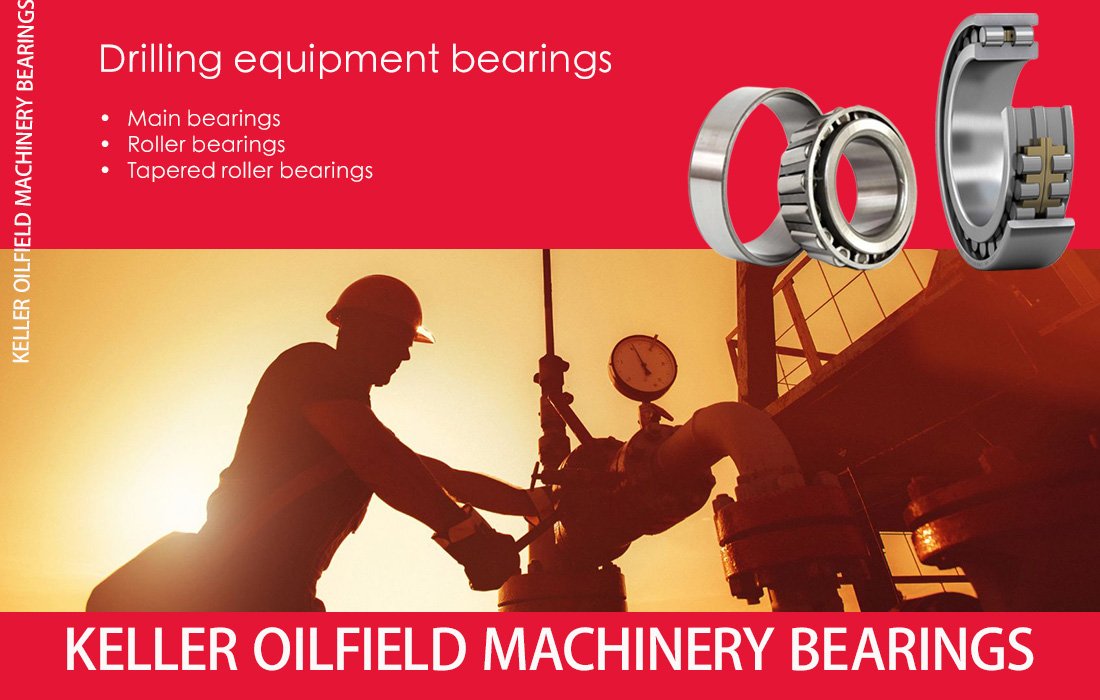
Petroleum equipment often operates in complex environments characterized by heavy loads, shock, vibration, and high temperatures, as well as exposure to dust, mud, and moisture. Due to variations in the structure and operating conditions of different types of equipment—such as drilling rigs, mud pumps, pumping units, fracturing equipment, and transport machinery—standard bearings sometimes fail to fully meet practical requirements. Consequently, an increasing number of enterprises are opting for custom-made bearings for their petroleum equipment.
Customizing bearings involves more than just modifying dimensions; it requires a comprehensive evaluation of factors ranging from materials, structure, and internal clearance to heat treatment and surface finishing. A sound customization plan can only be developed with a thorough understanding of the equipment’s operating conditions.
I. Dimensional Customization
Dimensions—including inner diameter, outer diameter, width, and mounting configuration—are the fundamental parameters in bearing customization. Constraints on equipment space may also necessitate specific flange dimensions, mounting hole locations, and dimensions for unique structural features.To avoid installation difficulties or poor fits caused by dimensional errors, it is essential to provide accurate equipment drawings, the model number of the existing bearing, or precise physical measurements prior to customization. Additionally, the fit between the shaft and the bearing housing must be considered to ensure proper operation after installation.
II. Material Customization
Different petroleum equipment entails varying loads and environmental conditions, resulting in distinct requirements for bearing materials. While standard bearing steel suffices for ordinary operating conditions, specialized conditions—such as heavy loads, shock, or high temperatures—require the selection of material systems tailored to specific needs.Material selection requires a balanced consideration of strength, hardness, wear resistance, toughness, and fatigue life, rather than focusing on a single performance attribute. An appropriate choice of materials lays the foundation for the bearing’s long-term, stable operation.
III. Sealing Structure
Petroleum equipment frequently operates in environments with high levels of dust, mud, and moisture. The ingress of contaminants into the bearing can lead to lubrication failure, raceway damage, and abnormal wear.Therefore, selecting an appropriate sealing structure based on the operating environment is crucial when customizing bearings. If the equipment demands high levels of dust and water protection, special attention should be paid to the seal type, sealing materials, and seal clearances to minimize the entry of external contaminants.
IV. Bearing Clearance
Internal clearance directly affects the bearing’s temperature rise, vibration levels, and operational stability. If the internal clearance is too small, insufficient space during high-temperature operation may lead to increased friction and heat generation; conversely, if the clearance is too large, it may result in increased equipment vibration and reduced operational precision.Therefore, when customizing bearings for petroleum equipment, appropriate clearance must be determined based on factors such as load, rotational speed, temperature, mounting method, and fit conditions, rather than simply applying standard product specifications.
V. Cage Design
The cage serves to separate the rolling elements and maintain their proper motion. Different cage materials and structural designs influence the bearing’s load-carrying capacity, temperature resistance, and high-speed performance.For heavy-load, high-impact, or high-speed operating conditions, the cage structure and material should be selected based on actual operational requirements. In special operating conditions, targeted designs can also be developed to meet specific equipment needs.
VI. Heat Treatment Process
Heat treatment significantly affects a bearing’s hardness, wear resistance, toughness, and fatigue strength. When customizing bearings, an appropriate heat treatment plan should be formulated based on the material and the intended operating conditions.
Inconsistent control of the heat treatment process can lead to issues such as insufficient hardness, non-uniform microstructure, or dimensional instability. Therefore, in addition to the material itself, attention must be paid to the manufacturer’s heat treatment processes and quality control capabilities.
VII. Surface Treatment
For corrosive or humid environments, or conditions involving specific types of wear, appropriate surface treatment options should be considered based on actual needs. Proper surface treatment can enhance a bearing’s wear resistance, corrosion resistance, or adaptability to special environments.
However, surface treatment is not required for every bearing; the decision to use it should be based on the working medium, temperature, load, and actual service life requirements.
VIII. Special Operating Condition Requirements
The most critical aspect of customizing bearings for petroleum equipment is clearly defining the actual operating conditions. Information regarding load, rotational speed, operating temperature, vibration, shock, lubrication method, contamination levels, and mounting method must be provided in advance.For example, high-temperature conditions require a focus on materials, heat treatment, and lubrication; high-speed conditions require a focus on precision, clearance, and cage design; and environments exposed to drilling mud or dust require a focus on sealing and contamination-prevention designs.
Conclusion
Customizing bearings for petroleum equipment is a systematic technical undertaking; it involves far more than simply altering bearing dimensions. Comprehensive consideration must be given to dimensions, materials, sealing structures, internal clearance, cages, heat treatment, surface treatment, and requirements for special operating conditions.
Therefore, when selecting a custom manufacturer, priority should be placed on their technical design capabilities, material control, machining precision, heat treatment capabilities, and inspection capabilities. Only by formulating a suitable solution based on actual operating conditions can custom bearings effectively meet equipment requirements, enhance operational stability and service life, and reduce the risks of equipment downtime and maintenance.


