
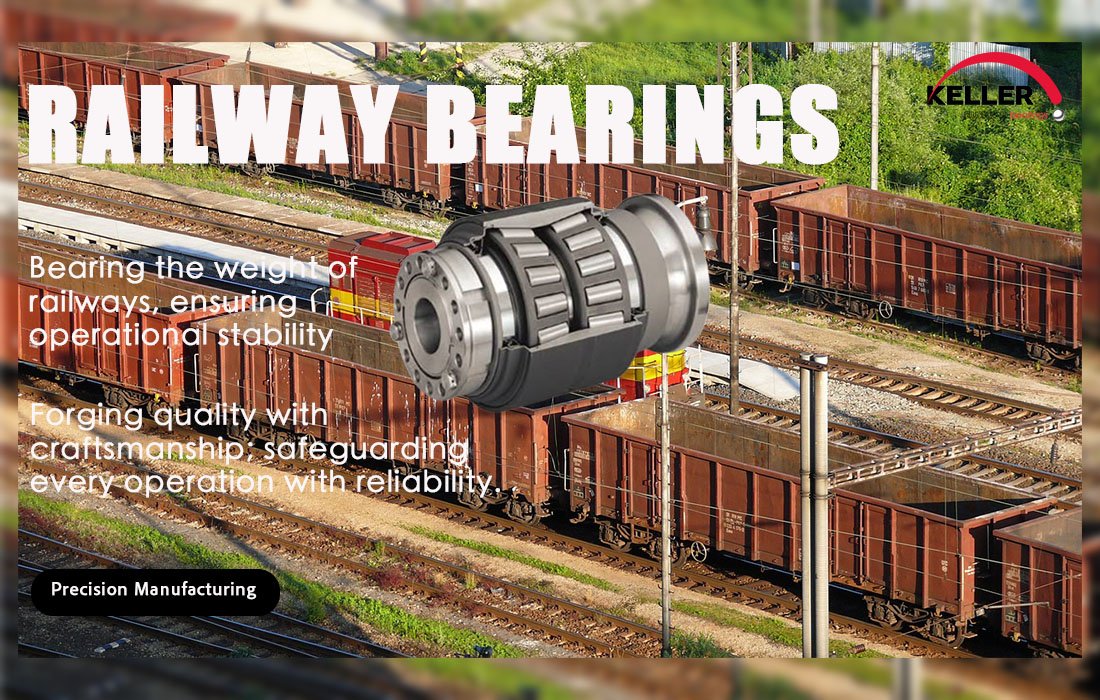
Railway bearings must withstand loads and high-speed rotation over long periods. During vehicle operation, they are also subjected to vibration, shock, and temperature fluctuations. Bearing service life is directly linked to the operational stability of the vehicle; therefore, life testing is a crucial component of performance evaluation.
Life testing provides insight into bearing performance under specific operating conditions. Testers record data such as operating time, temperature, vibration, and wear. Through data analysis, the bearing’s durability can be assessed.
Importance of Railway Bearing Life Testing
Railway vehicles often operate over long distances, requiring bearings to maintain stable rotation. Prolonged operation increases the risk of material fatigue and wear.
Life testing helps characterize bearing fatigue properties and identify potential structural or material issues.
Testing requirements are even more rigorous for high-speed railway bearings. High-speed rotation increases temperature rise and contact stress; consequently, rotational speed and load must be carefully controlled during testing.
Railway Bearing Life Testing Parameters
Railway bearing life testing typically involves multiple parameters.Operating time records the duration of continuous bearing operation. Testers set operating cycles based on the test plan.
Load directly affects bearing life; appropriate load conditions are selected based on actual application requirements.Rotational speed influences friction, temperature rise, and lubrication conditions. Different railway vehicles require different rotational speeds.
Temperature reflects the bearing’s operating status; a continuous rise in temperature may indicate changes in lubrication or contact conditions.
Vibration monitoring helps detect early-stage anomalies. Testers record vibration changes and perform trend analysis.
Railway Bearing Fatigue Life Testing
Fatigue is a major cause of failure during long-term bearing operation. Raceways and rolling elements endure cyclic loading over extended periods, potentially leading to the gradual accumulation of internal fatigue damage.
Fatigue life testing involves continuous loading and rotation, with testers monitoring and recording the bearing’s operating status.
If significant spalling, abnormal vibration, or temperature rise occurs, the cause is analyzed using the recorded test data.Fatigue life data helps evaluate the bearing’s long-term operational capability and provides a reference for structural optimization.
Railway Bearing Durability Testing
Durability testing focuses primarily on long-term operational performance. Testers operate the bearings continuously under specified conditions.
During the test, parameters such as temperature, vibration, and noise are recorded periodically. The lubrication status and bearing surfaces are also monitored.Upon completion of the test, components such as raceways, rollers, and cages are inspected. Wear patterns serve as a key reference for evaluating service life.
High-Speed Railway Bearing Life Testing
High-speed railway bearings must withstand high operating speeds. High-speed operation increases friction and temperature rise.
Testing focuses on temperature fluctuations under high-speed conditions, alongside monitoring vibration and lubrication status.Appropriate test conditions simulate actual operating environments more closely. Test data helps evaluate the durability performance of high-speed railway bearings.
Factors Affecting Railway Bearing Life
Bearing life is influenced by multiple factors.Load is a critical factor; excessive loads increase contact stress.Rotational speed affects temperature rise and lubrication conditions. Long-term high-speed operation places greater demands on the bearings.
Lubrication directly impacts friction and wear; proper lubrication helps reduce operational resistance.Contaminants also affect bearing life. Dust, moisture, and impurities can accelerate wear on raceways and rollers.
Additionally, material properties, heat treatment, manufacturing precision, installation methods, and operating temperatures influence bearing life.
Analysis of Railway Bearing Life Test Data
Life testing goes beyond merely tracking total operating time; it involves analyzing data from the entire operational period.
Temperature trends reflect the bearing’s thermal state, while vibration trends help detect operational anomalies. Changes in noise levels provide supplementary diagnostic information.Comprehensive analysis of test data allows for a holistic evaluation of railway bearing performance.
Value of Railway Bearing Life Testing
Life testing provides data to support product performance evaluation. Results inform structural optimization, material selection, and adjustments to lubrication strategies.
Long-term durability testing yields deeper insights into bearing performance under various operating conditions.
Systematic life testing helps enhance railway bearing reliability and provides a reference for determining maintenance intervals and operational management practices.


