
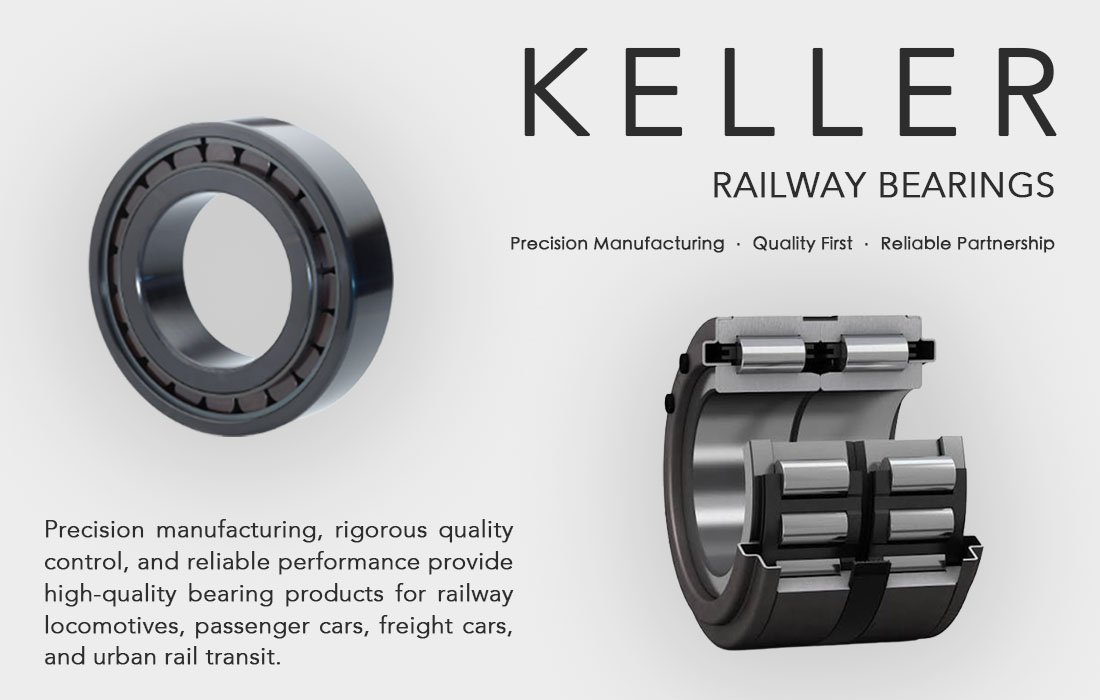
Railway bearings must maintain smooth, stable rotation. Mechanical noise is generated during bearing operation, and abnormal noise may indicate irregularities within the bearing or on its surfaces. Consequently, noise testing is a crucial step in quality control for railway bearings.
Noise testing allows for the assessment of a bearing’s operating condition and helps identify issues related to machining, assembly, lubrication, and surface quality. Noise control standards are particularly stringent for high-speed railway vehicles.
Importance of Railway Bearing Noise Testing
Operating noise may change when minute internal defects are present. Scratches on the raceway, roller irregularities, and unstable cage operation can all generate abnormal sounds.Timely noise testing helps identify operational anomalies. Test results can also be analyzed in conjunction with vibration data.
Stable noise levels generally indicate good rotational performance, whereas abnormal noise necessitates further inspection of the relevant components.
Railway Bearing Noise Testing Parameters
Railway bearing noise testing primarily focuses on sound pressure levels, noise frequencies, and sources of abnormal noise.Sound pressure levels reflect the overall noise intensity of the bearing, while frequency analysis helps identify specific types of anomalies.
Inspectors also monitor for unusual sounds, periodic noises, and irregular noise patterns, as these may be linked to the condition of the raceway, rollers, or cage.
Railway Bearing Noise Testing Methods
Bearings are typically operated within a controlled testing environment, where specialized equipment captures the sound generated during operation.
Testing requires the control of rotational speed, load, and lubrication conditions, as well as the maintenance of low background noise levels.
Stable testing conditions minimize the influence of external factors, thereby enhancing data comparability across different bearing batches.
Railway Bearing Noise and Vibration
There is a correlation between noise and vibration; surface defects in a bearing can lead to simultaneous changes in both vibration and noise characteristics.
Vibration testing focuses on analyzing mechanical motion signals, whereas noise testing concentrates on acoustic signals.
These two methods complement each other, allowing inspectors to make comprehensive assessments by combining time-domain and frequency-domain data.
Factors Affecting Railway Bearing Noise
Bearing noise is influenced by a variety of factors. Manufacturing precision affects the contact conditions between raceways and rollers. Surface roughness also influences operating noise.
Internal clearance likewise affects noise levels; excessive or insufficient clearance can alter the bearing’s operating state.Lubrication status is another critical factor; inadequate lubrication can increase friction and noise.
The condition of the cage affects the movement of rolling elements, and cage irregularities can generate periodic noise.Additionally, assembly precision, rotational speed, and load conditions influence the test results.
Noise Testing for High-Speed Railway Bearings
High-speed railway vehicles operate at high speeds, requiring bearings to maintain stable rotation.As rotational speeds increase, so do the requirements for manufacturing and assembly precision. Lubrication and internal clearance must also be strictly controlled.
Noise testing provides insight into high-speed operating conditions. By combining noise data with measurements of vibration and temperature rise, a more comprehensive analysis of bearing performance can be achieved.
Applications of Railway Bearing Noise Testing
Railway bearing noise testing is applicable to quality control, performance evaluation, and the analysis of operating conditions.Inspectors can maintain noise data records; comparing data across different stages allows for the monitoring of changes in bearing operating conditions.
When test results show significant anomalies, further inspections of the bearing surfaces, internal structure, lubrication status, and assembly conditions can be conducted.
Systematic noise testing enhances the completeness of quality assessments for railway bearings and provides data to support the stable operation of railway vehicles.


