
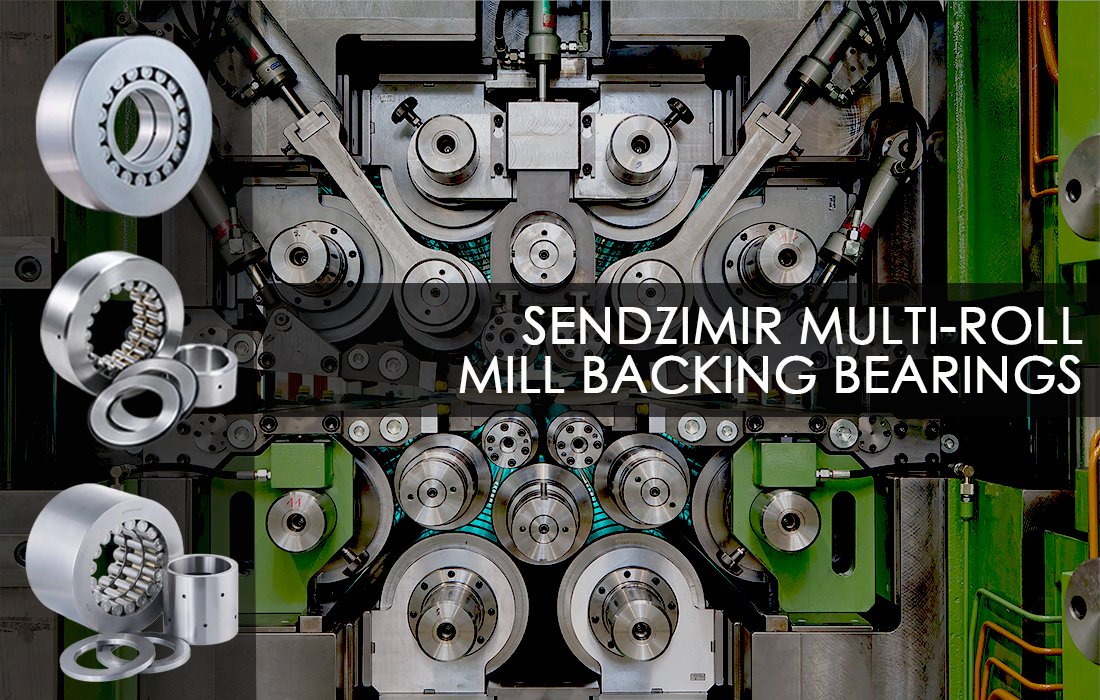
The Sendzimir 20-high rolling mill is a piece of high-precision cold-rolling equipment. It is primarily used for the cold rolling of stainless steel, silicon steel, precision alloys, and other high-strength metal strips. It features a 20-roll configuration in which multiple rolls share the rolling pressure. This structure enhances the mill’s rigidity and minimizes the deflection of the work rolls, enabling the processing of thinner metal strips.
What is a Sendzimir 20-high rolling mill?
Also known as a Sendzimir Mill or “20-High Mill,” this equipment falls under the category of multi-roll cold-rolling mills. It utilizes small-diameter work rolls, with intermediate rolls and backing rolls providing multi-stage support. Rolling forces are transmitted through the roll assembly to the mill housing.
This configuration is well-suited for high-strength materials and thin-gauge strips. Compared to conventional rolling mills, the 20-high structure allows for the use of smaller work rolls. Smaller work rolls reduce bending deformation during the rolling process, while the multi-roll support structure ensures the stability of the roll assembly.
What materials can a Sendzimir mill process?
Sendzimir mills are commonly used for the cold rolling of stainless steel. Due to the high strength and work-hardening characteristics of stainless steel, the process requires stable rolling pressure and precise control over strip shape; the 20-high mill meets these requirements effectively.
Sendzimir mills can also process silicon steel, nickel-based alloys, precision alloys, and other metal strips. Cold-rolled silicon steel products are used in electric motors and transformers, while precision alloys find applications in electronics, instrumentation, and precision manufacturing.
Why does the Sendzimir mill use a 20-roll structure?
The cold-rolling process generates significant rolling forces. If large-diameter work rolls were used, these forces would make it difficult to control deformation within the roll assembly. The Sendzimir 20-high mill employs smaller work rolls and utilizes multiple support rolls to control work roll deformation.
This design facilitates precise control over strip thickness and shape while enhancing rolling stability. This is particularly important for thin-gauge metal strip. The equipment can also integrate roll adjustment and flatness control systems to enhance the dimensional accuracy of the final product.
What is the function of Sendzimir backing bearings?
Backing bearings are a crucial component of the roll assembly in Sendzimir rolling mills. Their primary role is to provide support and transmit loads. During the rolling process, these bearings must withstand significant radial loads while maintaining stable rotation.
Higher cold-rolling speeds impose more demanding operational requirements on the bearings. Factors such as lubrication, contamination, load, and temperature rise all affect bearing performance. Consequently, dimensional accuracy, rotational precision, internal clearance, and operational stability are of critical importance.
Stable backing bearings help the mill maintain the precision of the roll assembly and ensure a consistent roll gap. In the cold rolling of stainless steel and precision strip, these factors directly influence the thickness and flatness of the final product.
Where are Sendzimir 20-high rolling mills used?
Sendzimir 20-high rolling mills are primarily used for the processing of high-precision metal strip. Typical materials include stainless steel, silicon steel, precision alloys, nickel-based alloys, and high-strength alloy strip.
These cold-rolled materials serve a wide range of downstream industries. Stainless steel strip is used in automotive applications, home appliances, elevators, kitchenware, and industrial equipment. Silicon steel is utilized in electric motors and transformers, while precision metal strip is used for electronic components, instrumentation, and precision machinery.
Thus, the Sendzimir mill is not merely a piece of cold-rolling equipment but a vital tool for precision metal processing.
Why are Sendzimir mills suitable for precision cold rolling?
Precision cold rolling demands high standards for material thickness, flatness, and surface quality. The Sendzimir 20-high mill employs a multi-roll support structure that enhances the overall rigidity of the mill. Small-diameter work rolls enable significant reduction capabilities, while intermediate rolls and backing rolls provide stable support.
These structural features collectively improve the stability of the rolling process. Sendzimir mills are highly suitable for processing stainless steel, silicon steel, and other high-strength materials.
Conclusion
The Sendzimir 20-high mill is a multi-roll mill designed for precision cold rolling. It utilizes a stable roll assembly structure consisting of work rolls, intermediate rolls, and backing rolls. The equipment is capable of processing thin-gauge, high-strength, and high-precision metal strips.
Within the overall rolling system, the mill structure, roll assembly control, and backing bearings all influence equipment operation. Therefore, understanding the structure and operational characteristics of the Sendzimir 20-high mill facilitates a better understanding of modern cold rolling processes.


