
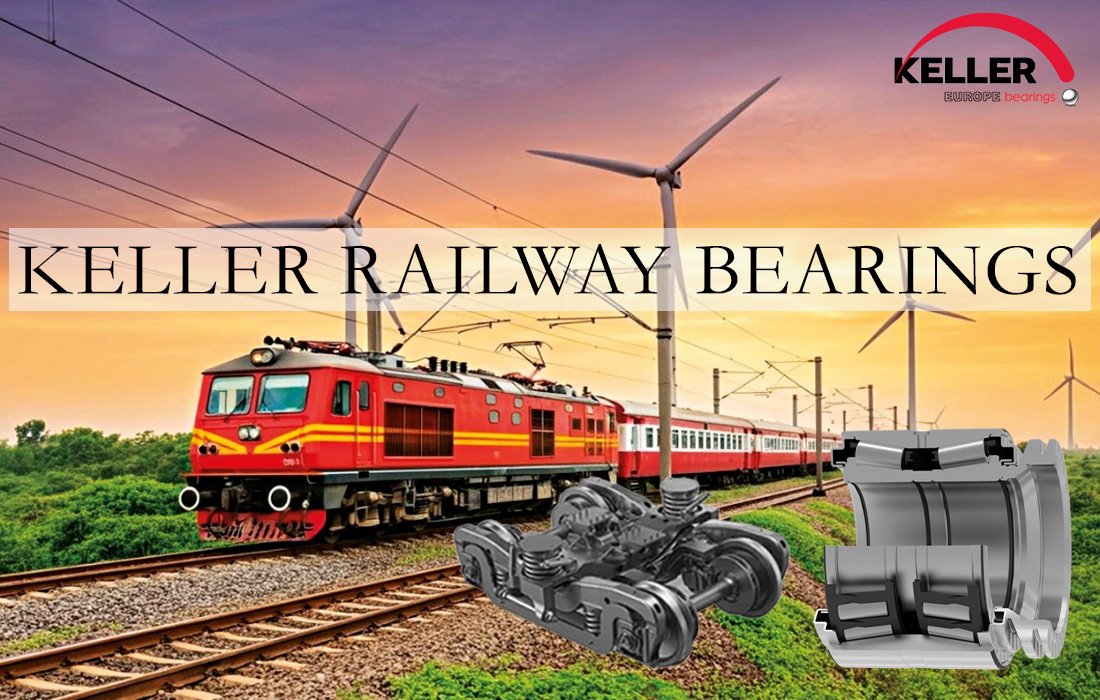
The development of subways and urban rail transit is rapid, leading to a continuously increasing demand for railway bearings. Although small in size, bearings play a crucial role; they support axles and wheelsets while reducing friction and vibration, thereby directly influencing the operational stability of the vehicles.
Railway Bearings in Subways
Subway trains operate for long hours daily and undergo frequent starts and stops, requiring bearings to withstand repeated acceleration and deceleration.Subway axle-box bearings primarily support the wheelset, bearing the weight of the vehicle body while also absorbing shocks and vibrations generated by the track. Consequently, these bearings must possess excellent load-bearing capacity.Furthermore, subway operating environments are complex, with potential exposure to dust and moisture in tunnels. Therefore, bearings require superior sealing performance; a reliable sealing structure minimizes the ingress of contaminants.Noise control is also essential for subways, necessitating high rotational precision in bearings. Precision bearings reduce vibration and noise, thereby enhancing the passenger experience.
Bearing Applications in Urban Rail Vehicles
Urban rail vehicles include light rail, trams, and suburban trains. As operating speeds and track conditions vary across these vehicle types, bearing selection differs accordingly.First, wheelset bearings must support the vehicle load. Second, they must accommodate curved tracks and frequent starts and stops—particularly given the prevalence of curves on urban lines—requiring excellent impact resistance.Additionally, since some urban rail vehicles operate continuously over long periods, bearings must offer a long service life. High-quality materials reduce wear, while proper lubrication minimizes friction.
Key Performance Requirements for Railway Bearings
First, bearings require high load-bearing capacity. Vehicles generate loads from various directions during operation, so bearings must maintain stable performance.Second, bearings need good wear resistance. Subways cover long daily distances, subjecting bearings to continuous friction; wear-resistant materials help extend their service life.Furthermore, bearings require effective sealing. Urban rail vehicles often operate in both outdoor and underground environments, exposing bearings to rain, dust, and other contaminants.At the same time, bearings must be capable of withstanding temperature fluctuations. Climatic conditions vary significantly across different regions; therefore, manufacturers must select materials and greases based on actual operating conditions.
Manufacturing and Maintenance of Railway Bearings
High-quality bearings require precision manufacturing. Manufacturers must control bearing dimensions and ensure high surface quality for raceways and rolling elements.Additionally, heat treatment enhances material properties, while precision grinding improves rotational accuracy. Consequently, advanced manufacturing processes ensure more stable bearing performance.Operators must also conduct regular inspections during use, monitoring parameters such as temperature, vibration, and noise. Promptly addressing any anomalies helps minimize the risk of failure.
The International Market for Railway Bearings
As urban rail transit infrastructure expands, international demand for railway bearings is rising, offering significant growth potential in overseas markets.Buyers typically prioritize product quality and technical specifications, alongside delivery lead times and after-sales service. Suppliers should therefore provide comprehensive product documentation.This documentation should cover model numbers, dimensions, materials, and precision grades, as well as compatible vehicle types and operating conditions, enabling customers to quickly select the right products.
Conclusion
Railway bearings play a vital role in subways and urban rail vehicles by supporting wheelsets and reducing friction and vibration, thereby ensuring stable vehicle operation.As urban rail transit continues to develop, demand for high-precision railway bearings will grow. Specialized manufacturers must continuously improve product quality to provide reliable railway bearing solutions to global customers.


