
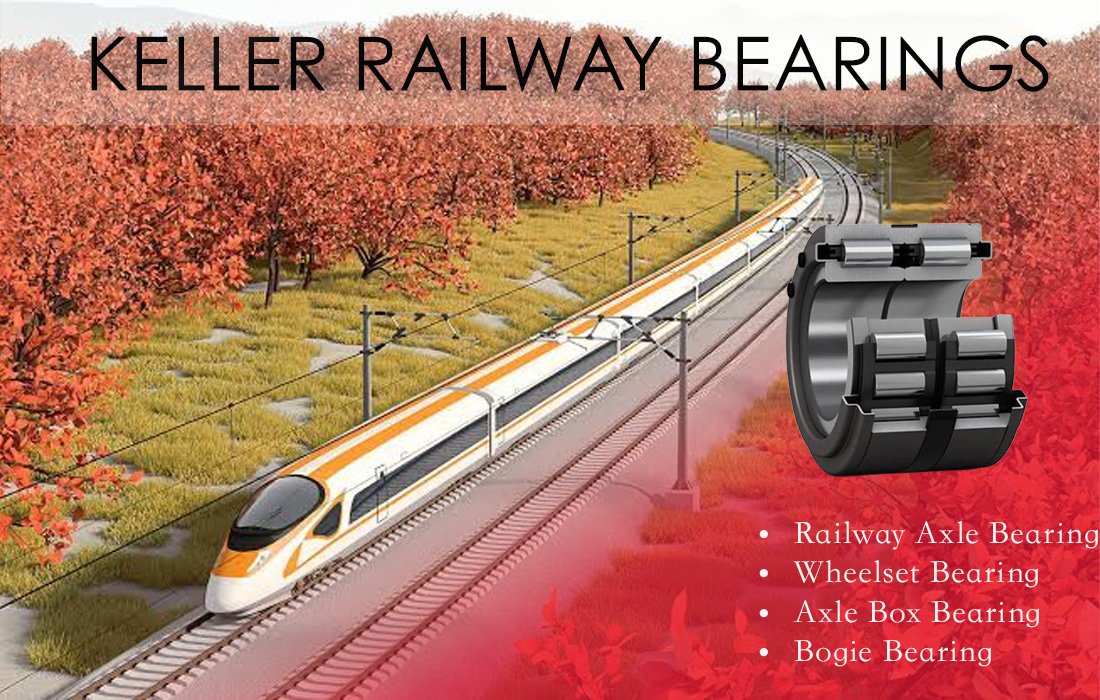
Rotational speed, internal clearance, and precision class are all critical parameters for railway bearings, as they influence the bearing’s operating performance. Consequently, purchasers need to understand these parameters to select the most suitable bearings.
What is railway bearing rotational speed?
Rotational speed refers to the number of revolutions a bearing makes per minute, typically measured in r/min. Generally, the higher the operating speed of the railway vehicle, the higher the rotational speed of the axles and bearings.Excessive rotational speed increases friction and can lead to a rise in bearing temperature. Therefore, for high-speed rail applications, it is crucial to consider the bearing’s limiting speed and reference speed.
Different bearing designs offer varying speed capabilities; for instance, rolling bearings with superior high-speed performance are often used in high-speed operating conditions. Lubrication methods also impact rotational speed.Thus, purchasers should not base their decisions solely on train operating speed; they must also consider factors such as bearing dimensions, design, lubrication, and operating temperature.
What is railway bearing internal clearance?
Bearing internal clearance refers to the amount of movement (gap) between the rolling elements and the raceways within the bearing. Radial internal clearance is a common parameter.Clearance must be neither too large nor too small. Excessive clearance can result in noticeable vibration and noise during operation.
Insufficient clearance can lead to increased friction and rising bearing temperatures. Therefore, selecting the appropriate clearance is vital.Common clearance classes include C2, CN, C3, and C4. CN typically denotes normal clearance, while C3 indicates clearance greater than CN.
The appropriate clearance for railway vehicles depends on rotational speed, temperature, and installation conditions. Purchasers must therefore verify these parameters based on actual operating conditions.
What is railway bearing precision class?
Precision class primarily reflects a bearing’s dimensional accuracy and rotational accuracy. Different classes entail varying manufacturing requirements.Common standards include P0, P6, P5, and P4. Generally, the lower the number, the higher the precision requirement.
For standard railway equipment, the appropriate class can be selected based on specific needs. However, high-speed trains place greater emphasis on rotational accuracy, requiring stricter precision control for their bearings. High-precision bearings reduce vibration and operating noise; consequently, the precision grade directly impacts the vehicle’s ride comfort.
What is the relationship between these three parameters?
Rotational speed, internal clearance, and precision are not independent parameters; they collectively influence the bearing’s operating condition.First, high-speed operation increases the bearing’s temperature rise, necessitating appropriate internal clearance.
Second, precision affects rotational stability; therefore, high-speed equipment typically requires higher manufacturing precision.Furthermore, lubrication also impacts bearing performance. Buyers must therefore consider speed, clearance, precision, and lubrication conditions holistically.
How should parameters be confirmed during international procurement?
When inquiring, overseas customers can provide the bearing model number, as well as details regarding the vehicle type and installation location.
Additionally, customers can specify operating speeds, working temperatures, lubrication methods, and the operating environment.If the customer has the original manufacturer’s part number, providing that directly allows the supplier to verify the speed, clearance, and precision grade using product catalogs.This approach minimizes selection errors and improves communication efficiency during the procurement process.
Conclusion
For railway bearings, rotational speed reflects rotational capability; internal clearance affects operating temperature and stability; and precision grade influences rotational accuracy and vibration levels.
Therefore, the selection of high-speed railway bearings requires a comprehensive assessment of these parameters. Only by matching the bearing specifications to actual operating conditions can stable performance be maintained.
Understanding these parameters enables overseas buyers to compare different railway bearing products more quickly and select the most suitable model.


