
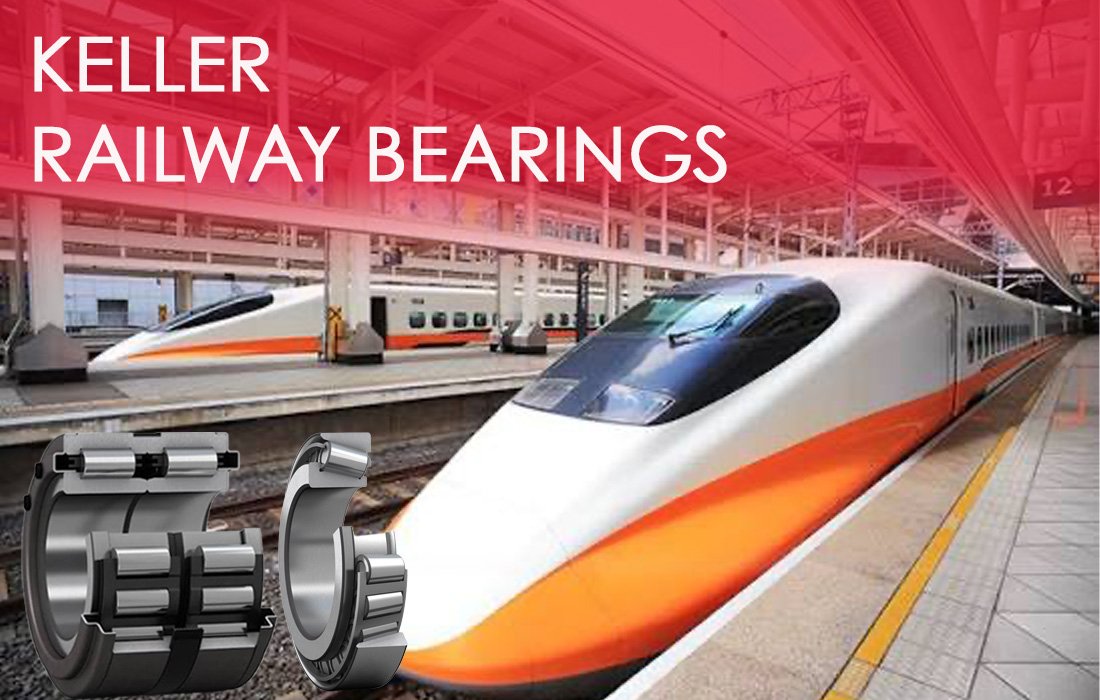
High-speed trains operate at high velocities, placing greater demands on railway bearings. Although small in size, bearings play a critical role: they support the axles and wheelsets while minimizing friction and vibration.As train speeds increase, so does the rotational speed of the bearings. Consequently, standard bearings often struggle to meet the requirements of high-speed operation. High-performance railway bearings ensure stable operation and help reduce maintenance costs.
The impact of high-speed operation on bearings
During high-speed operation, axles rotate rapidly and continuously, subjecting bearings to high rotational speeds. This rapid rotation also generates heat.Excessive bearing temperatures can compromise operational performance; therefore, bearings require excellent heat dissipation and lubrication capabilities.Furthermore, high-speed operation amplifies vibration issues. Insufficient bearing precision can lead to increased vehicle vibration and noise. High-precision railway bearings help ensure smooth, stable vehicle operation.
Key advantages of high-performance railway bearings
First, high-performance bearings offer superior load-bearing capacity. High-speed trains must support the weight of the car body, passengers, and equipment, requiring bearings to withstand complex loads over extended periods.Second, bearings must possess excellent wear resistance. High-speed rotation increases friction; thus, the use of high-quality materials minimizes wear and extends the bearing’s service life.Additionally, bearings require excellent high-speed performance. They must adapt to high rotational speeds while effectively controlling operating temperatures.They must also maintain high precision. High-precision bearings reduce vibration and noise, thereby enhancing passenger comfort.The importance of lubrication for high-speed railway bearingsLubrication directly impacts bearing performance. Appropriate grease reduces friction, heat generation, and wear.Therefore, high-speed rail applications require lubricants suited to high-speed operating conditions. The grease must exhibit excellent thermal stability and maintain effective lubricating properties.Moreover, operators must regularly monitor lubrication status. Insufficient lubrication can cause bearing temperatures to rise rapidly; timely maintenance helps mitigate the risk of failure.
Sealing performance is equally important
High-speed trains operate in diverse environments. Rain, dust, and other impurities can affect bearings; therefore, reliable sealing structures are essential.Effective sealing minimizes the ingress of contaminants while helping to maintain internal lubrication. Consequently, seal design directly impacts the bearing’s service life.
Export Demand for High-Performance Railway Bearings
With the continued expansion of global high-speed rail networks, there is significant international demand for high-performance railway bearings.Overseas buyers typically focus on bearing models, materials, and precision levels, as well as rotational speed, load capacity, and service life.Suppliers must therefore provide comprehensive technical documentation, including specifications regarding dimensions, materials, precision grades, and compatible rolling stock models.Furthermore, consistent product quality is crucial. Proper packaging mitigates risks during export shipping, while timely delivery ensures customers can adhere to their production schedules.
Conclusion
High-speed trains require high-performance railway bearings. These bearings must withstand high rotational speeds and complex loads while effectively managing temperature, minimizing vibration, and maintaining optimal lubrication.Consequently, high-precision, high-load-capacity, and highly reliable railway bearings have become vital components for high-speed rail systems. As the high-speed rail sector continues to grow, international demand for these high-performance bearings is expected to rise steadily.


