
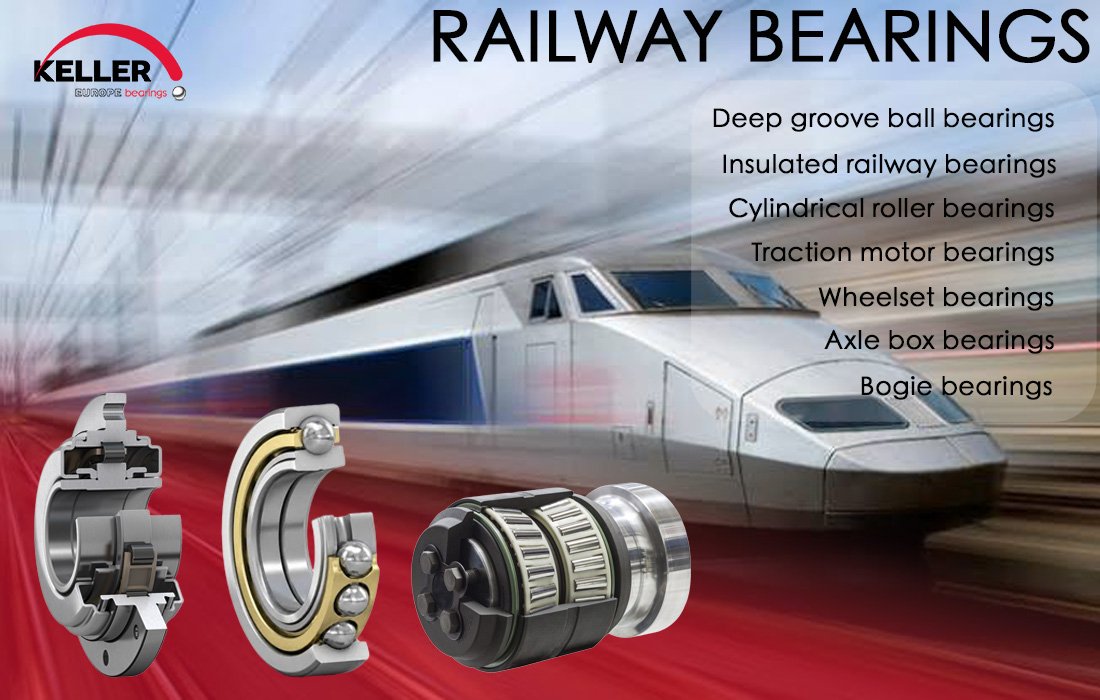
Railway bearing dimensions are critical parameters for procurement and selection. Typically, these dimensions include the inner diameter (bore diameter), outer diameter, and width.Understanding these three dimensions helps overseas buyers quickly verify product specifications and minimizes errors during installation or model selection.
1. What is the inner diameter of a railway bearing?
The inner diameter refers to the diameter of the bearing’s central hole, commonly referred to as the “Bore Diameter” or “Bearing Bore.”The inner diameter is directly related to the axle size. Since railway bearings are mounted onto axles, the inner diameter must precisely match the axle journal.An inside micrometer or other precision measuring tool can be used to measure the inner diameter. For standard bearings, the inner diameter can also be estimated from the product model number.For instance, some metric bearings use a numerical code to indicate the inner diameter. If the last two digits of the model number are “04” or higher, multiplying that number by 5 typically yields the inner diameter size.However, different bearing series may follow different conventions. Therefore, buyers should verify the specifications using the product catalog.
2. What is the outer diameter of a railway bearing?
The outer diameter refers to the maximum diameter of the bearing’s outer ring, commonly referred to as the “Outside Diameter” or “Outer Diameter.”The outer diameter directly affects how the bearing fits into the axle box or other mounting housing; therefore, it must accurately match the available installation space.If the outer diameter is too large, the bearing may not fit; if it is too small, installation stability could be compromised.Consequently, buyers must confirm the outer diameter based on the equipment’s installation dimensions and check the housing structure and fit requirements.
3. What is the width of a railway bearing?
The width refers to the bearing’s dimension along its axial direction.The width affects the installation space required for the bearing. Railway axle boxes and gearboxes, in particular, often have specific requirements regarding bearing width.If the width is incorrect, the bearing may not be positioned properly. Therefore, buyers need to verify the inner diameter, outer diameter, and width simultaneously.
4. How do you correctly check railway bearing dimensions?
First, check the bearing model number. The model number helps buyers identify the corresponding product series.Second, consult the manufacturer’s product catalog. Catalogs typically list the inner diameter, outer diameter, and width.Next, verify the actual dimensions of the bearing. If the full model number is unavailable, you can measure the bearing directly.Finally, compare the measurements with the product catalog to further confirm the model number.
5. The Relationship Between Railway Bearing Dimensions and Selection
Selecting railway bearings involves more than just looking at dimensions. First, the installation location must be identified; for instance, bearings for axle boxes, wheelsets, and gearboxes have different requirements.Second, load conditions must be considered. High-speed trains and freight wagons operate under different conditions, resulting in varying load-bearing requirements.Additionally, factors such as rotational speed, temperature, lubrication, and sealing performance must be taken into account.Therefore, accurate dimensions are merely the first step in the selection process. Comprehensive information regarding operating conditions enables suppliers to recommend the most suitable products.
6. What Parameters Are Needed for International Procurement?
When making an inquiry, overseas customers can provide the bearing model number. If the model number is unknown, providing the inner diameter, outer diameter, and width is also acceptable.It is also advisable to specify the vehicle type and installation location—such as high-speed trains, electric multiple units (EMUs), locomotives, or freight wagons.Furthermore, providing details on operating speed, load, and working temperature is beneficial. The more complete the information, the easier it is for the supplier to identify the correct model.
Conclusion
The inner diameter, outer diameter, and width are three critical dimensions for railway bearings. The inner diameter corresponds to the axle mounting size, the outer diameter relates to the space within the bearing housing, and the width affects the axial mounting position.
Consequently, purchasers should verify all three dimensions and then select the appropriate bearing based on the model number and actual operating conditions.For international procurement of railway bearings, accurate dimensional data improves communication efficiency and helps customers quickly find the right products.


