
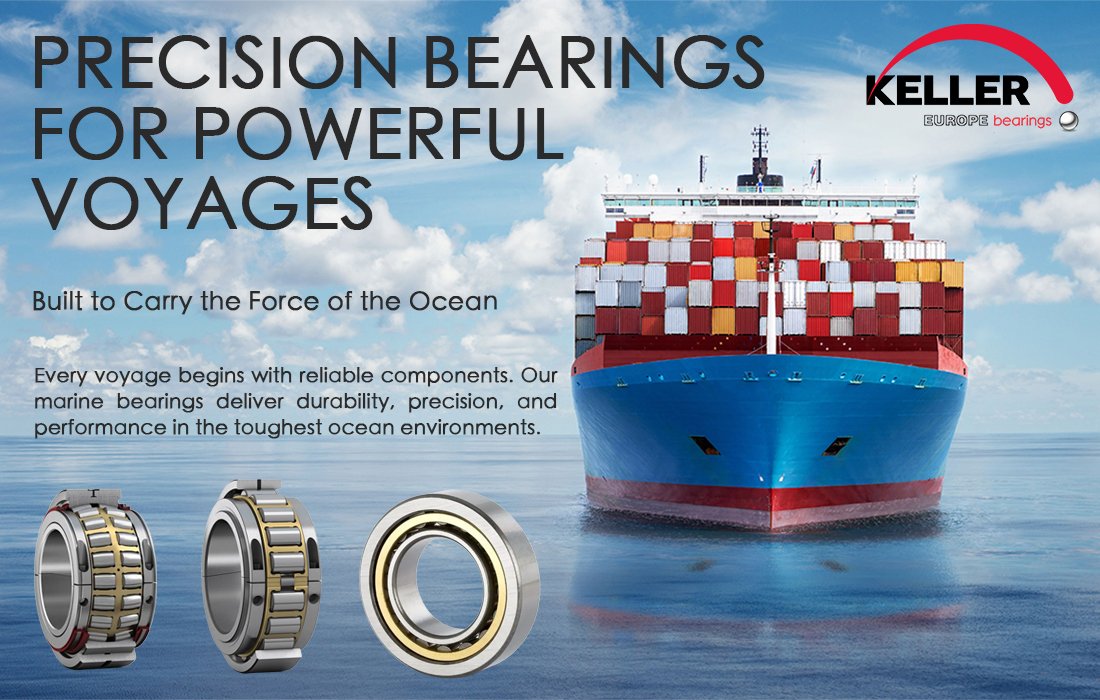
The stern bearing is a critical component of a ship’s propulsion shafting system, primarily serving to support the propeller shaft and ensure the stable operation of the propulsion system. During navigation, the propeller generates significant radial loads and vibrations; the stern bearing must continuously withstand these forces while maintaining the proper functioning of the shafting system.
Typically installed inside the stern tube at the ship’s aft end, the stern bearing is also known as a stern tube bearing or propeller shaft bearing. It is widely used in container ships, bulk carriers, oil tankers, engineering vessels, and various other commercial ships. Due to constant exposure to the marine environment, stern bearings must possess excellent wear resistance, corrosion resistance, and stability.
Primary Functions of Stern Bearings
The primary function of the stern bearing is to support the propeller shaft and maintain the shafting system in its correct alignment. During operation, the propeller is subjected to hydrodynamic resistance and thrust forces, generating substantial loads. The stern bearing facilitates smooth rotation of the propeller shaft and minimizes shaft misalignment and vibration.
Additionally, stern bearings reduce frictional losses during shaft operation. High-performance bearings improve propulsion efficiency, minimize equipment wear, and extend the service life of the ship’s propulsion system.
Main Types of Stern Bearings
Stern bearings are primarily categorized into water-lubricated and oil-lubricated types, based on their lubrication method and materials.
Water-lubricated stern bearings utilize seawater as the lubricating medium. This design eliminates the need for traditional lubricating oil, thereby reducing the risk of environmental pollution. With the modern shipping industry placing increasing emphasis on environmental sustainability, water-lubricated stern bearings are seeing wider application in “green shipping.”
Oil-lubricated stern bearings utilize lubricating oil to form a film that minimizes direct contact between the shaft and the bearing. This type offers superior load-bearing capacity and is commonly used in the propulsion systems of large vessels. Technical Characteristics of Water-Lubricated Stern Bearings
Water-lubricated stern bearings represent a significant technological trend in the maritime industry. They are typically manufactured from rubber, composite materials, or specialized engineering materials.
These bearings offer excellent water resistance and wear resistance. During operation, seawater enters the bearing clearance, providing lubrication while simultaneously helping to lower operating temperatures.
Compared to traditional lubrication methods, water-lubricated stern bearings are more environmentally friendly and require less maintenance, making them well-suited for the long-term operational demands of modern vessels.
Common Materials for Stern Bearings
The material used for a stern bearing directly impacts its performance and service life.
Rubber is a traditional material for stern bearings; its inherent elasticity allows it to accommodate a certain degree of shaft misalignment.
The use of composite materials for stern bearings has increased in recent years. These materials offer superior wear resistance, low-friction characteristics, and strong environmental adaptability.
Additionally, metal materials such as copper alloys are used in some bearing designs to provide high mechanical strength.
Operation and Maintenance of Stern Bearings
After prolonged operation, stern bearings may experience issues such as wear, increased clearance, and heightened vibration. Consequently, regular inspection of the bearing’s condition is crucial.
Maintenance procedures should focus on monitoring bearing wear, lubrication status, and the operational condition of the propeller shaft. Detecting anomalies early helps reduce the risk of equipment failure.
Proper installation and correct operational management also contribute to extending the service life of stern bearings.
Development Trends in Stern Bearings
Driven by increasingly stringent requirements for energy efficiency and environmental protection, stern bearing technology is evolving toward low friction, high wear resistance, and eco-friendliness.
New composite materials, water-lubrication technologies, and intelligent monitoring systems are increasingly being applied in marine propulsion. Future developments will place greater emphasis on operational efficiency and environmental adaptability.
Summary
Stern bearings are critical components of marine propulsion systems, playing a vital role in the stable operation of the propeller shaft. From traditional oil-lubricated designs to modern water-lubricated composite material technologies, stern bearings have continuously improved in reliability and environmental performance, providing vital support for the safe navigation of vessels.


