
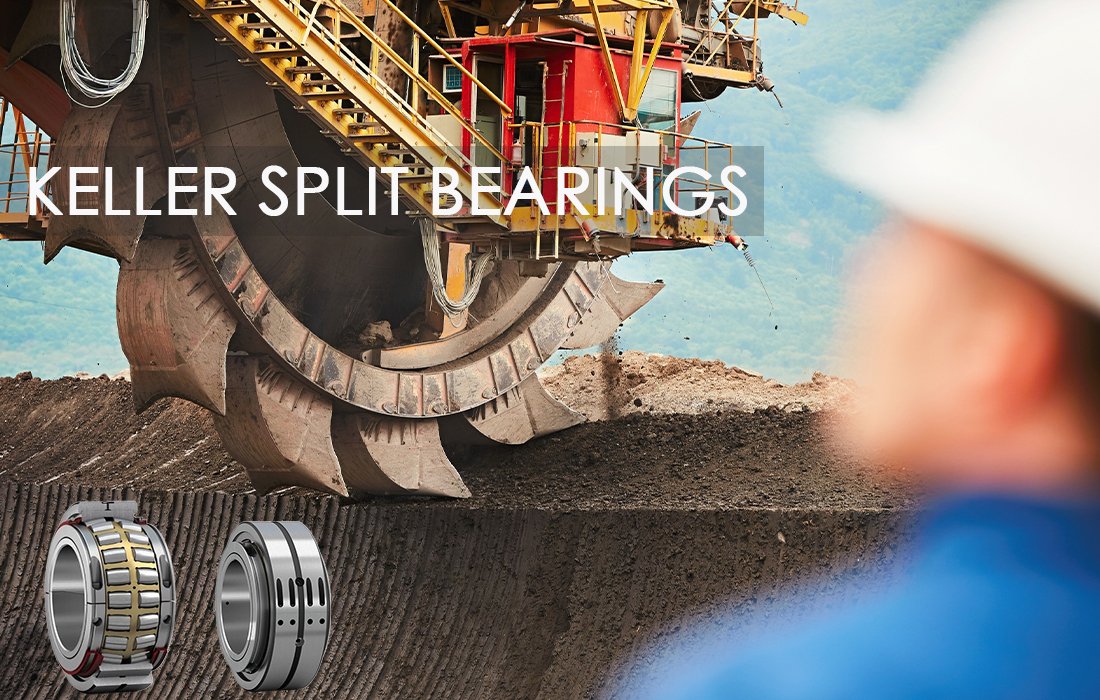
Bucket-wheel reclaimers perform continuous stacking and reclaiming operations for bulk materials such as coal, ore, and aggregates. During operation, the bucket-wheel mechanism continuously executes rotation, material reclaiming, and conveying actions. Consequently, the bearings within the machine play a critical role in providing structural support and facilitating power transmission. Selecting the right bearings helps maintain smooth equipment operation and enhances continuous operational capability.
The Role of Bucket-Wheel Reclaimer Bearings
Bucket-wheel reclaimers are subjected to significant radial and axial loads during operation. Additionally, the bucket-wheel mechanism must withstand impacts from the material being handled, as well as load fluctuations caused by the starting and stopping of the equipment.
Bearings connect key moving parts and ensure the stable operation of the rotating mechanism. High load-bearing capacity reduces friction and vibration during operation, thereby helping the reclaimer maintain high operational efficiency.
Furthermore, the operating condition of the bearings directly impacts the overall stability of the bucket-wheel mechanism. Therefore, selecting appropriate bearing specifications lays a solid foundation for the equipment’s long-term operation.
Demanding Operating Conditions Test Bearing Performance
Bucket-wheel reclaimers are typically deployed in ports, thermal power plants, mines, and large material storage yards—environments often characterized by dust, moisture, and temperature fluctuations.
Moreover, these machines require continuous, long-term operation. Frequent slewing (rotation) subjects the bearings to constant alternating loads. Consequently, the bearings must possess robust load-bearing capacity, wear resistance, and environmental adaptability.
In particularly dusty areas, attention must be paid to bearing sealing and lubrication. Effective protection prevents contaminants from entering the bearing assembly, thereby reducing the risk of abnormal wear.
Selecting Bearings for Bucket-Wheel Reclaimers
When selecting bearings for a bucket-wheel reclaimer, users must consider the equipment’s structural design and actual operating conditions. First, it is essential to determine the type and magnitude of the loads the bearings will encounter.
Second, operating speed and working temperature must be taken into account. Different operating conditions influence the choice of bearing materials, structural design, and lubrication strategies.
Additionally, the available installation space is a crucial factor to consider. Users must determine the appropriate specifications based on the shaft diameter, bearing housing dimensions, and installation method.
Therefore, a comprehensive assessment based on specific operating conditions is essential to ensure the bearings effectively meet the operational requirements of the bucket-wheel machine.
Lubrication and Maintenance Affect Bearing Lifespan
Proper lubrication reduces internal friction and lowers temperature rise during operation. Personnel should establish a lubrication plan based on the equipment’s operating environment and the bearing’s working status.
During routine inspections, particular attention should be paid to bearing temperature, vibration, and operating noise. If abnormal noise occurs or temperatures rise continuously, personnel must promptly inspect the lubrication status and related connecting components.
Additionally, the area surrounding the bearings should be kept clean. The ingress of dust and impurities into the bearing can accelerate wear on the rolling elements and raceways.
Regular inspections, proper lubrication, and correct installation help maintain stable bearing performance.
Bucket-Wheel Machine Bearings Support Continuous Conveying
As bulk material handling equipment trends toward larger sizes and continuous operation, bucket-wheel machines place higher demands on bearing performance. Bearings must not only withstand operational loads but also endure long-term, high-load working environments.
Consequently, when selecting bearings for bucket-wheel machines, users should comprehensively consider load-bearing capacity, operating speed, sealing performance, lubrication methods, and installation conditions.
Routine maintenance is equally critical. Prompt detection of operational anomalies and the implementation of targeted maintenance measures can reduce the risk of equipment downtime.
In summary, while bearings are fundamental components of the equipment, they directly influence the operational stability of the bucket-wheel mechanism. Proper selection and standardized maintenance enable the bucket-wheel machine to maintain efficient, stable, and continuous operation.


